
A wooden USB drive sample can look perfect and still fail you in the field. Before you sign off on one, test three things beyond the finish: whether the cap or swivel closure fits and holds, whether the connector clears the wood body cleanly in a real port, and whether the drive handles normal transport and everyday use without the wood shell cracking or the branding wearing off.
Why a visual check isn’t enough on wood
Metal and plastic USB shells come off a mold in identical, repeatable dimensions. Wood doesn’t. Every piece has its own grain, density, and moisture content, so two drives cut from the same species and the same batch can still fit a cap or a USB port slightly differently.
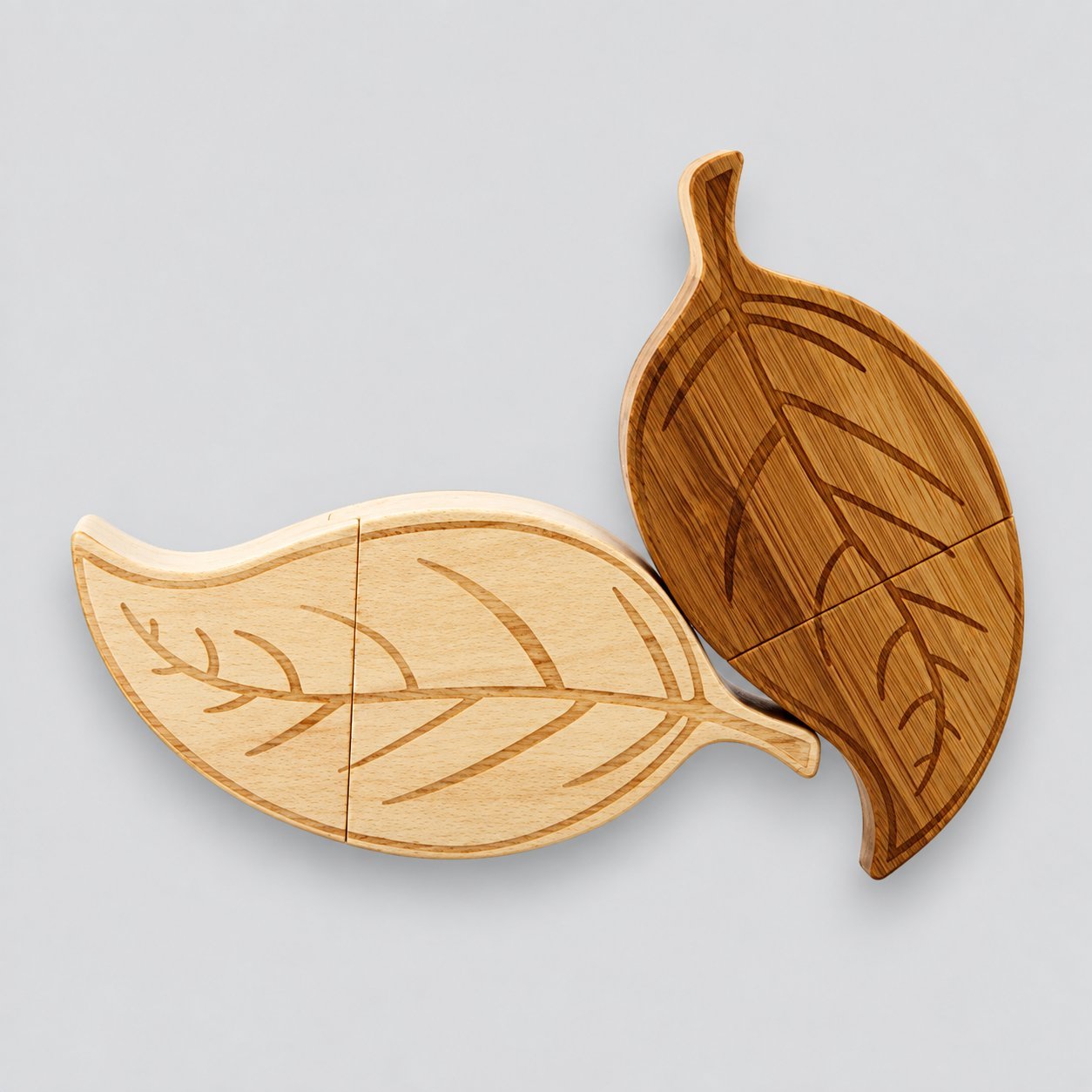
That’s not a defect on its own. It’s a property of the material. YOUSAN’s own wooden USB drive line notes that grain and color vary within a batch for this reason, and that kiln-dried wood (moisture at or below roughly 8%) plus pore-sealing, coatings, or resin fill and adequate wall thickness are what keep this variation from turning into cracking or warping. A sample approved on looks alone tells you nothing about whether that moisture control and wall thickness were actually applied to the piece in your hand.
This is why sample testing for wood needs its own physical checklist, separate from the logo color and grain-pattern checks you’d run on any custom USB order.
Test 1: Cap or swivel closure fit
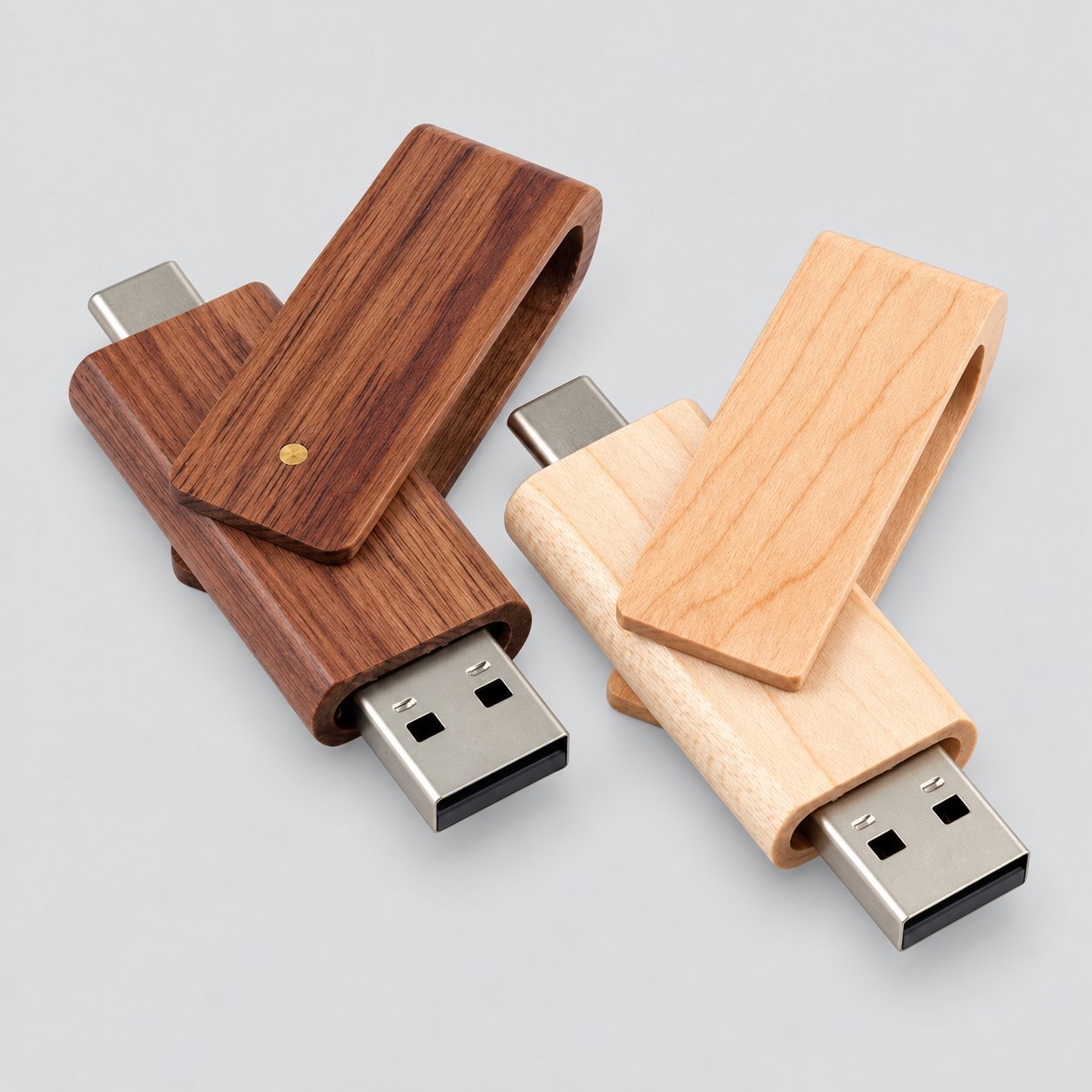
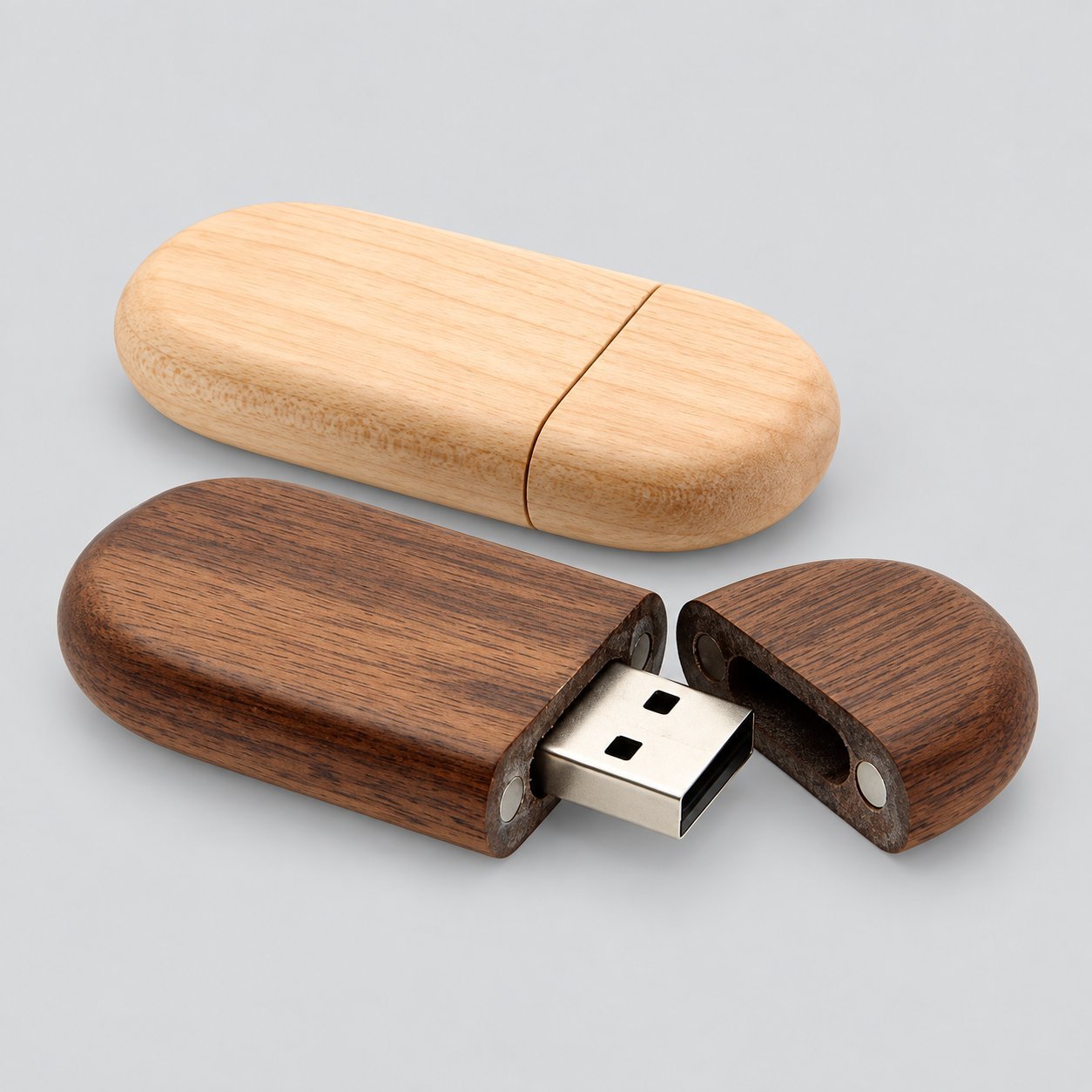
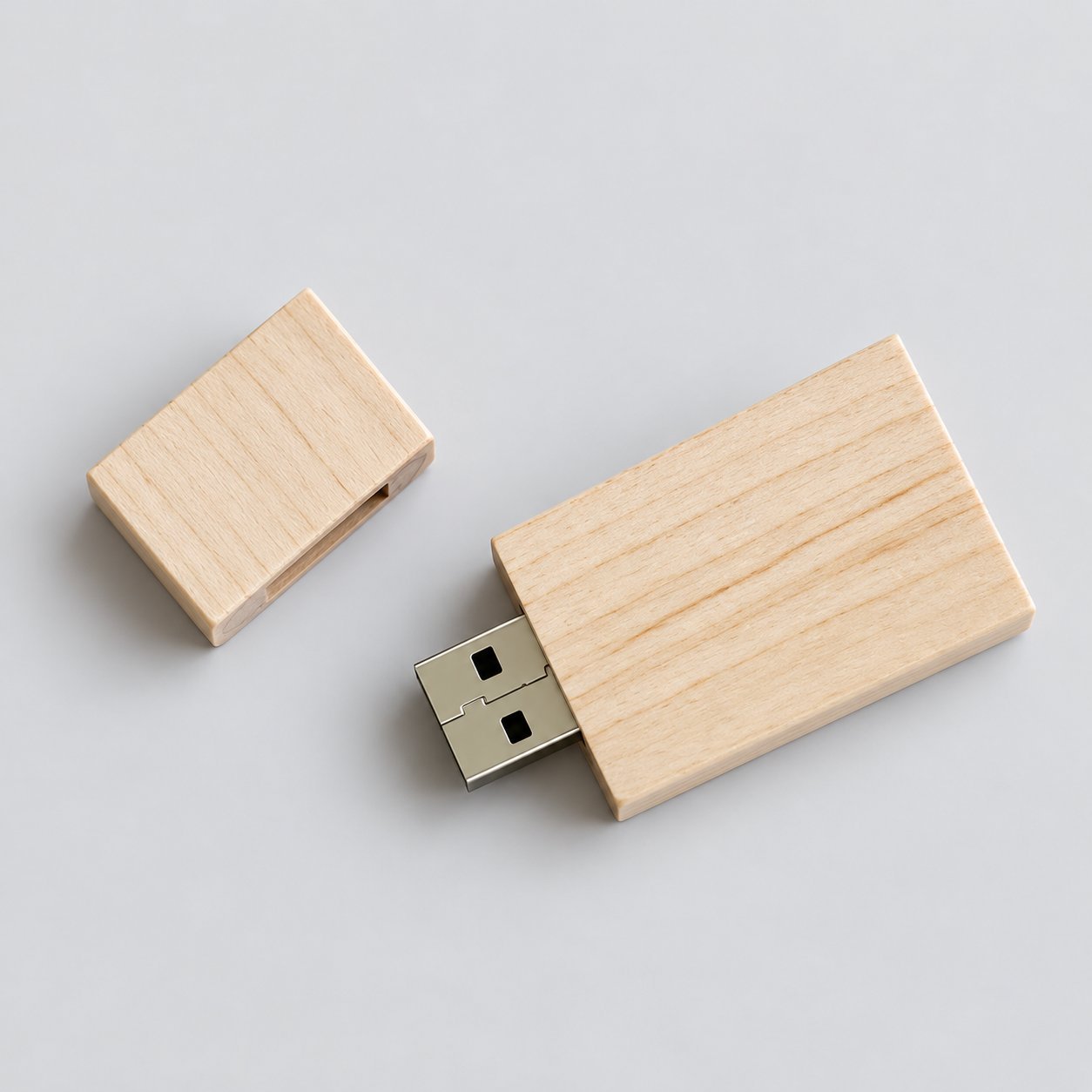
Wooden USB drives generally use one of two closure designs. Some have a separate cap that pulls off and posts onto the back of the drive. Others use a swivel-style rotating cover built into the wood body, which shields the connector without a separate cap piece at all.
Each design fails differently, so test each on its own terms.
For a cap-style drive, remove and replace the cap by hand at least 20 to 30 times and check whether it still seats fully and holds without wobbling. A cap that’s tight on day one but loosens fast under repeated use will end up lost in a laptop bag within a few weeks of real use.
For a swivel-style drive, rotate the cover open and closed the same number of times and check that it locks fully open (so it doesn’t spring back over the connector mid-use) and closes flush enough to protect the connector pins from dust and knocks.
YOUSAN’s own guide to evaluating USB flash drive supplier quality lists cap or swivel-cycle testing as one of the function and durability checks worth running on any USB sample, alongside connector fit and enumeration. Ask your supplier what cycle count they test internally. If they don’t have one, treat that as a gap to raise, not something to assume is fine.
Test 2: Connector and port clearance
Wood adds thickness around the connector that a molded plastic or metal shell doesn’t have in the same places. Before you approve a sample, plug it into two or three different real devices, not just the one demo laptop the supplier hands you.
Check three things each time: does the connector seat fully home without you having to push at an angle, does the wood body clear the ports next to it on a laptop or a hub with multiple close-set USB ports, and does the drive sit level once inserted, rather than tilting under its own weight.
This matters more if you’ve ordered a dual-interface or Type-C option. YOUSAN’s wooden USB line lists USB 2.0, USB 3.0, USB 3.1, and Type-C or OTG dual-interface as available options, and each connector type has different physical dimensions and tolerances around the wood housing. Confirm clearance separately for whichever interface you’ve actually ordered rather than assuming a USB-A test result carries over to a Type-C version of the same shape.
If your order includes a custom shape, such as a guitar or cross silhouette rather than the standard rectangular stick, port clearance deserves extra attention. An unusual outline can look fine on a rendering and still crowd an adjacent port once the physical piece is in your hand. If you haven’t settled on a shape and species yet, YOUSAN’s custom wooden USB drive guide is a useful starting point before you get to this stage of testing.
Test 3: Handling and everyday durability
This is the test most buyers skip because it’s the least visible on a sample photo. Run it anyway, especially if the drivers are going to travel in bags, get handed out at events, or sit on a desk for years as a branded giveaway.
A reasonable handling test covers a few real-world conditions rather than a single drop test with no defined method. Check the drive after normal handling (carrying it loose in a pocket or bag for a few days), after a light wipe test with a soft dry cloth (the maintenance method YOUSAN’s own care guidance recommends), and after a brief temperature swing if your market sees hot cars or cold warehouses, since YOUSAN’s published operating range for its wood-cased drives is -10°C to 55°C, with -20°C to 60°C for storage.
There’s no single industry-standard drop height or cycle count published for wooden USB shells the way there is for some industrial electronics. Don’t assume your supplier tests to a specific standard unless they tell you which one, and agree on a simple, repeatable method in writing instead of leaving it open. A defined drop height onto a hard surface, a fixed number of drops, and a clear pass or fail description (does the wood chip, crack, or separate from the internal PCB) is enough for most bulk promotional orders.
What to check on a sample, at a glance
| Test | What to check | How to test it | Fail signal |
|---|---|---|---|
| Cap or swivel fit | Closure seats fully and holds without wobbling | Open and close by hand 20-30 times | Loosens, won’t seat, or springs open |
| Connector clearance | Full seating, level fit, no crowding of nearby ports | Insert into 2-3 real devices, including a multi-port hub | Angled insertion needed, blocks adjacent port |
| Wood shell integrity | No cracking, warping, or seam separation | Normal-handling carry test, wipe-down, temperature swing | Visible crack, warp, or coating lift |
| Branding durability | Logo or engraving still legible and adhered | Wipe test plus the handling period above | Fading, flaking, or edge lifting of print |
| Environmental tolerance | Performs within stated operating/storage range | Note ambient conditions during your test period | Malfunction or visible damage within stated range |
Keep a written record of what you approved
A sample that passes all three tests is only useful if production actually matches it. Photograph the approved sample from multiple angles, note the wood species and finish, and keep the physical unit as your reference for incoming inspection once the bulk order arrives.
This record-keeping habit matters more for wood than for metal or plastic, precisely because natural variation is expected. Without a dated reference sample and photos, you have no way to tell the difference between normal grain variation in a new batch and an actual quality slip.
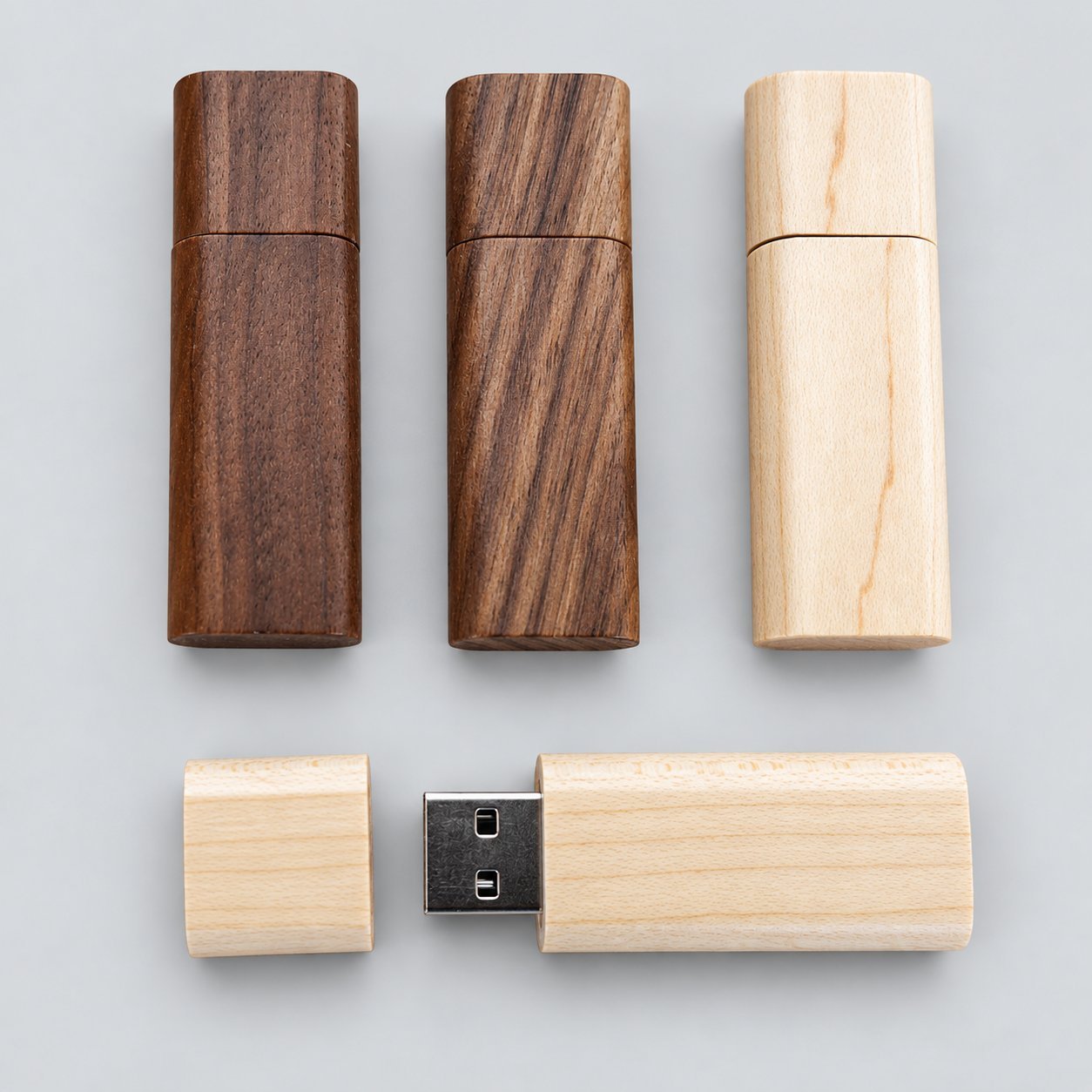
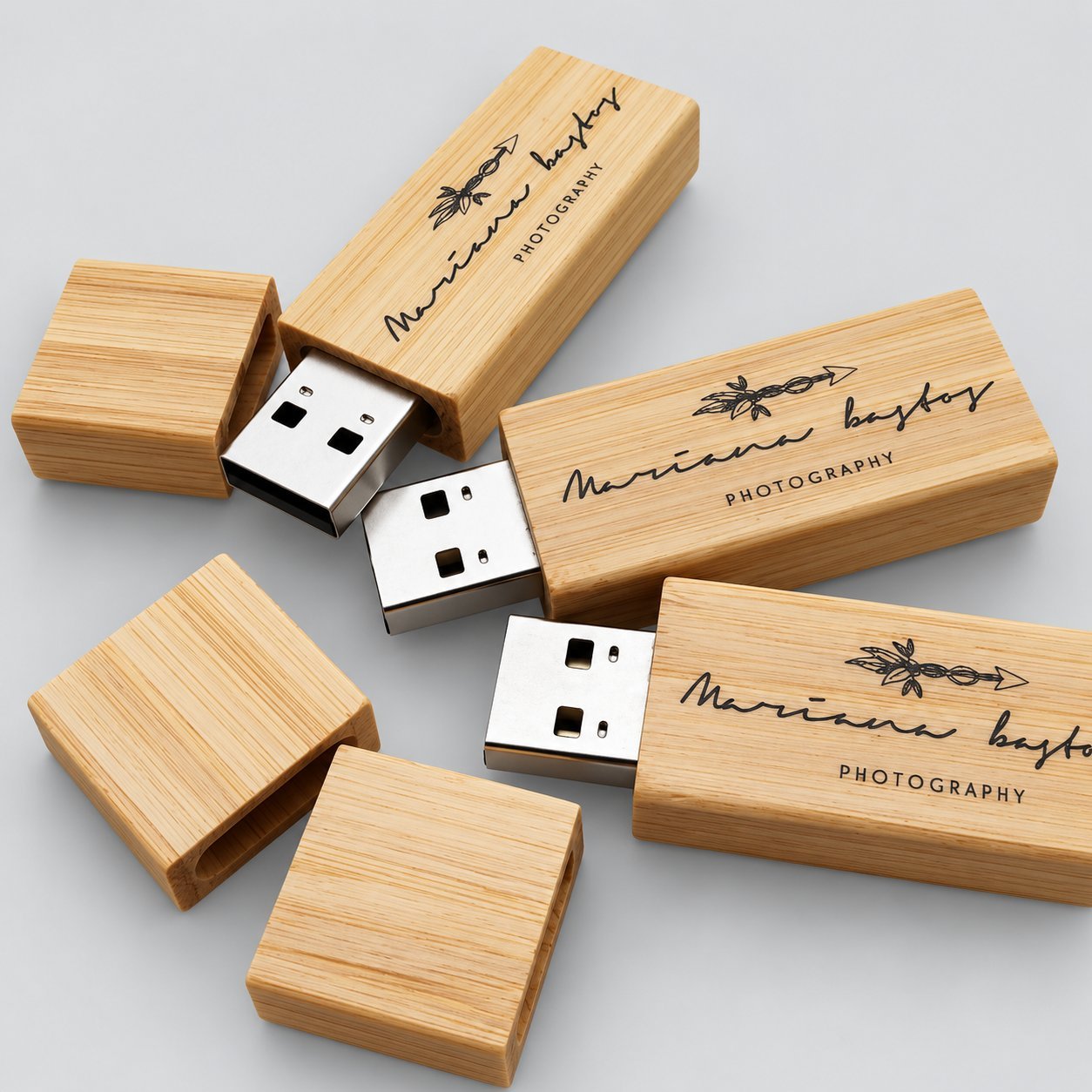
If you’ve already confirmed your drive’s actual casing construction (solid wood, veneer over a core, or wood-look plastic) via YOUSAN’s casing construction guide, that verification and this physical test are two different steps in the same approval process. One confirms what the material is. This one confirms whether the physical piece actually works and holds up.
Custom Wood USB Sticks FAQ
Do I need to test every sample, or just one?
Test more than one if your order spans multiple wood species, colors, or a custom shape. A single sample tells you about that one piece of wood, not about how the natural variation across a full production batch will hold up. For a straightforward reorder of an already-approved design, a smaller spot check is usually enough. Ask your supplier what sample quantity they’ll provide for testing before you commit to a full order.
How many times should I open and close the cap or swivel cover before I trust it?
There’s no universal number published for wooden drives specifically. Twenty to thirty open-close cycles by hand is a reasonable starting point that catches most early wear issues without requiring lab equipment. If the closure is already loosening at that point, don’t approve the sample as-is. Ask your supplier for a firmer fit or a different closure mechanism.
Can a wooden USB drive shell actually crack from normal use?
It can, particularly if the moisture content or wall thickness wasn’t controlled during manufacturing. That’s exactly what the handling test in this guide is meant to catch before you commit to a bulk quantity. Request confirmation of kiln-drying and coating steps directly from your supplier, and request a written sample size and quote for your target quantity and finish so you can compare that against what you test.
Does the closure type (cap vs. swivel) affect price or lead time?
It can, since a swivel mechanism is a different mold and assembly step than a simple pull-off cap. Confirm both the mechanism type and its price impact when you request your quote, rather than assuming the two options cost the same.
What if my sample passes but a later production batch doesn’t?
This is why the written record above matters. Keep your approved sample, its photos, and the date of approval on file, and compare incoming production against that reference rather than against memory or a rendering. If a batch doesn’t match, you have a documented baseline to raise with your supplier.
Get a sample before you commit
Request a physical sample in your target wood species, closure type, and connector interface so you can run this cap-fit, port-clearance, and handling test yourself before committing to a bulk order.

 Deutsch (Österreich)
  English
  Español de México
  Italiano
  Русский
  Français
  Türkçe
  Bahasa Melayu