
Importing USB flash drives from China to Mexico involves specific requirements. As a USB manufacturer with 15 years of production experience, YOUSAN offers important advice to help you prepare for qualification compliance, Mexican customs clearance, product compliance, and cost accounting. This ensures your products meet local trade rules and market demands, enabling smooth customs clearance and efficient trade procurement.
1. Taxes and Duties
- HS Code is essential: HS Code number for USB flash drives is actually 8523.5110. Wrong declaration of HS Code can cause differences in duties or fines from customs.
- Declaration strategy: Make truthful declarations to escape fines; think about performing batch imports to mitigate taxes owed on an individual shipment.
- Trading mode selection:
Volume: Large quantities (> 5,000 units); Cost/Speed; Priority; Comment; sea freight + customs clearance
Medium and Small Parcel of goods: DDP logistics services will be preferred for easy customs clearance.
Samples/test orders: Use international carriers such as FedEx/UPS. Cost is higher, but faster.
2. NOM Certification: Lifeline for Market Access
No certification = No customs clearance. USB flash drives must comply with the NOM-003-SCFI-2014 standard.

- Core certification requirements:
It is necessary to appoint a local representative for Mexico (RMF) to take care of applications and later compliance.
It is necessary for products to feature a NOM mark and a certification number.
Spanish labeling and manuals are also mandatory, meaning neither can be skipped.
Compliance with the electrical safety, EMC (Electromagnetic Compatibility) tests, as well as the mechanical safety test, is mandatory. - The certification process would involve these steps: “Prepare samples + Spanish documents” → “Testing at a Mexican-accredited laboratory (approximately 4-6 weeks).” The “Certificate’s validity would range from 1 to 5 years from
- Cost:Approximately 2,000 to 5,000 USD per model for the products being tested.
- Risk Alert: Un-certified USB flash drives will be detained at customs with fines of up to 200% of the item’s value.
3. Logistics and Customs Clearance: Controlling Time and Costs
Comparison of logistics solutions:
| Transportation Method | Applicable Scenarios | Cycle | Cost | Key Notes |
| Sea Freight (FCL) | Large quantities (≥1,000 units) | 35-45 days | Lowest | Formal customs clearance required; cargo insurance recommended |
| Air Freight | Emergency restocks/new product testing | 5-10 days | Medium-High | Suitable for samples and high-value products; fast clearance |
| Courier (DHL/UPS) | Small quantities (<500 units) | 3-7 days | Highest | Clearance included; ideal for test orders and samples |
| Rail-Sea Intermodal Transport | Cost-effectiveness priority | 25-35 days | Medium | Advance planning needed; supported by selected ports |
Necessary customs clearance documents:
- Commercial invoice (Spanish or English)
- Packing list
- Bill of Lading/Air Waybill
- Original NOM certification certificate
- Certificate of Origin (if applicable)
- Mexican Importer’s RFC Tax ID (mandatory)
Packaging guidelines:
- Anti-static protection is essential to prevent damage during transportation.
- Control each carton’s weight within 20kg for easy handling.
- Mark outer cartons with “Fragile” and correct stacking labels.
- USB content must be legal, free of pirated software or prohibited information.
4. Payment and Financial Arrangements
Recommended payment methods:
- T/T (Telegraphic Transfer):
Mostly adopted. Suggest 30% as advance payment + 70% as copy of Bill of Lading.
PayPal: Primarily used for small purchases or samples. Has multi-currency capabilities but exorbitant fees of between 4-6%. - Local payment solutions:
Collect pesos through Mexican local payment solution partner XTransfer to bypass exchange losses and fees associated with cross-border payments.
Letter of Credit (L/C): Used for major transactions. “Soft Clauses” must be avoided with the greatest of caution.
Exchange rate and cost control:
- Consider locking in exchange rates or making partial payments to minimize the risks of peso fluctuation.
- Logistics+duties+certification fees, which account for about 40 to 60% of the value of goods, shall be fully considered in pricing.
- Clearly explain the sharing of taxes and the cost of logistics with the suppliers during the price negotiation.
5. Product Compliance and Localization
Mexican market adaptation points:
- Voltage/frequency: Mexico’s voltage/frequency is 127V/60Hz. The USB devices must be compatible or they will not work.
- Language requirements:On packaging, products should bear Spanish warning instructions or precautions.The instruction manuals have to be written in Spanish; it is desirable that they also be in English.
- Interface language: If it has a display, the Spanish options are mandatory.
- Product Specification Strategy:
- Storage capacity:Mainstream demand ranges from 16GB to 128GB.
Interface: It is recommended to employ USB 3.0 or faster high-speed interfaces for compatibility with common devices in Mexico.
Value-added features: Adding encryption functions is a good idea, since the encrypted USB sales market in Mexico has been increasing rapidly
6. Supplier Selection and Quality Control
Screening qualified suppliers:
- Factory Inspection Essentials:
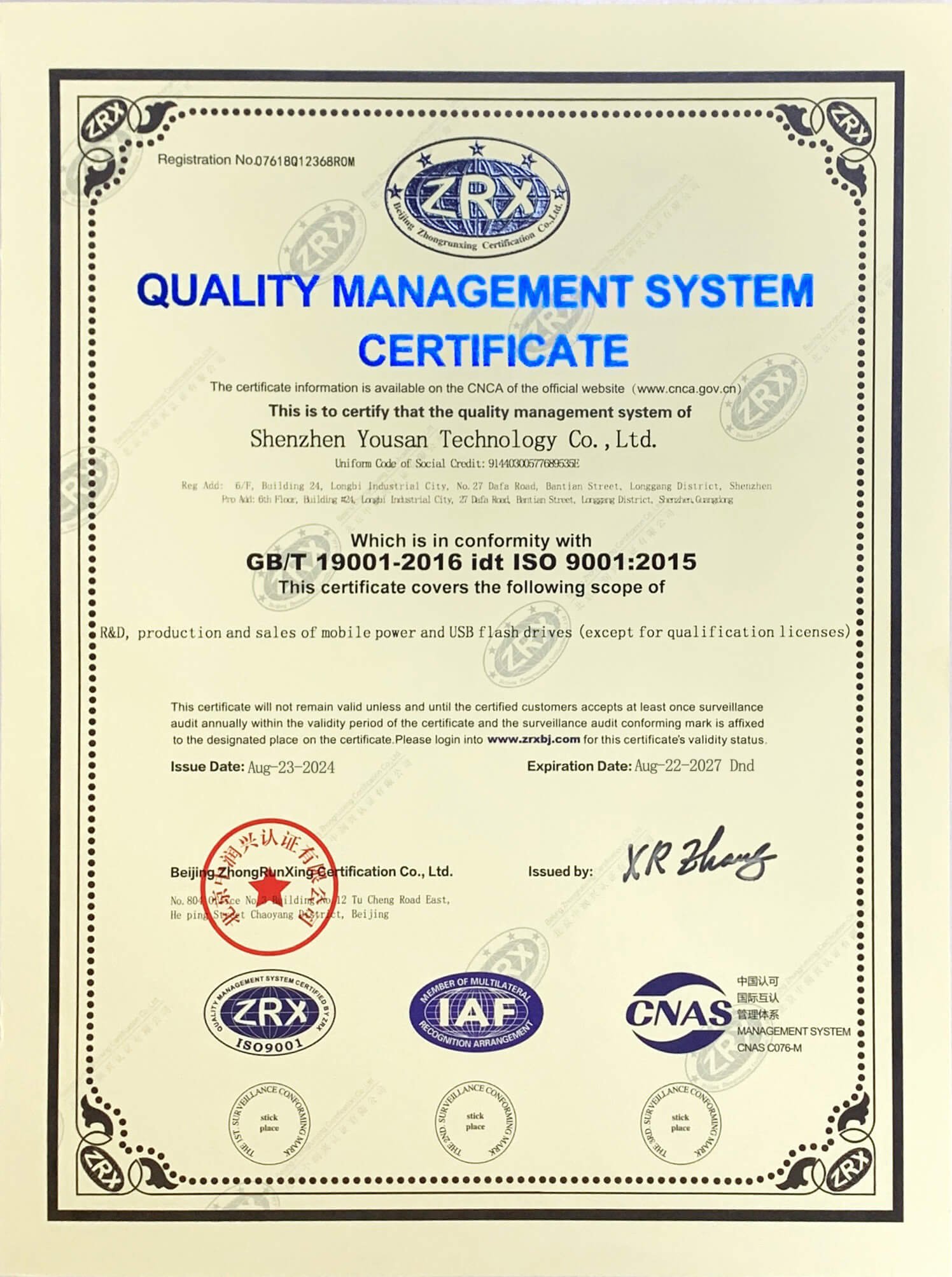
Check the ISO 9001 certificate for a quality production process.
Give preference to manufacturers with experience selling to Mexico to familiarize them with certification standards.
Conduct on-site factory inspections or video factory inspections to verify the quality of production equipment and processes. - Testing Process Example:
a. Testing for initial samples (comprising 5 to 10 units): Read/write speed, compatibility, stability.
b. Testing on local devices (computers, television sets, automobile systems, etc.) available in Mexico.
c. Extreme condition testing: High temperature (40℃+), low temperature (-10℃), humidity.
d. Enter into a quality assurance contract prior to mass production, defining defect levels and terms of return/exchange.
Order strategy:
- New products: Limit trial orders to 500-1,000 units; scale up after verifying market response.
- Regular products: Place orders in batches based on sales forecasts to avoid inventory backlogs.
- Establish long-term cooperation with high-quality suppliers to secure price advantages and priority production rights.
7. Market Expansion and Channel Layout
- Characteristics of the USB flash drive market of Mexico:
- Hierarchical retail channels refer to
Great chains (Walmart, Soriana): Large volume of sales but low profit margin (5-10%). It provides an appropriate distribution for standardized products.
Specialized electronics stores like Steren: Profit margins (15-25%), where mid-to-high segment products will be a good fit.
Marketplaces online – such as MercadoLibre – have been one of the fastest-growing channels, ideal for new product testing and niche products. - Customer segments:
Educational institutions: large stable orders, price sensitive, value durability.
Corporate market: Many high personalization requirements such as logo printing, software installations, high volumes of orders. Personal Consumption: Focus on design and affordability, driven by the social media.
Differentiated competition strategy:
- Provide services for customization: Custom logos done with a laser engraver, pre-installed software
- Value-added services: Data backup services, encryption solutions, technical hotlines for support.
- Bundle Sales:Bundle products with computer accessories, mobile phones, among other products to increase the value of the order.
Mexico’s USB Flash Drive market is lucrative but also has high compliance thresholds and costs. To succeed, even in the most basic USB drive sector, you must start with NOM certification and have a reliable way to calculate taxes given the variety of different customs values in Mexico. You also need a good logistics solution (we recommend using freight-forwarders with experience fulfilling USB drives to Mexico) as well as the localization of your drives. For newcomers (and all smuggling veterans) we strongly advocate going for the manufacturers DDP service and bringing your first few hundred pieces in sample testing before you get started or setting up mass imports.

 English
  Español de México
  Italiano
  Deutsch (Österreich)
  Русский
  Français
  Türkçe
  Bahasa Melayu