
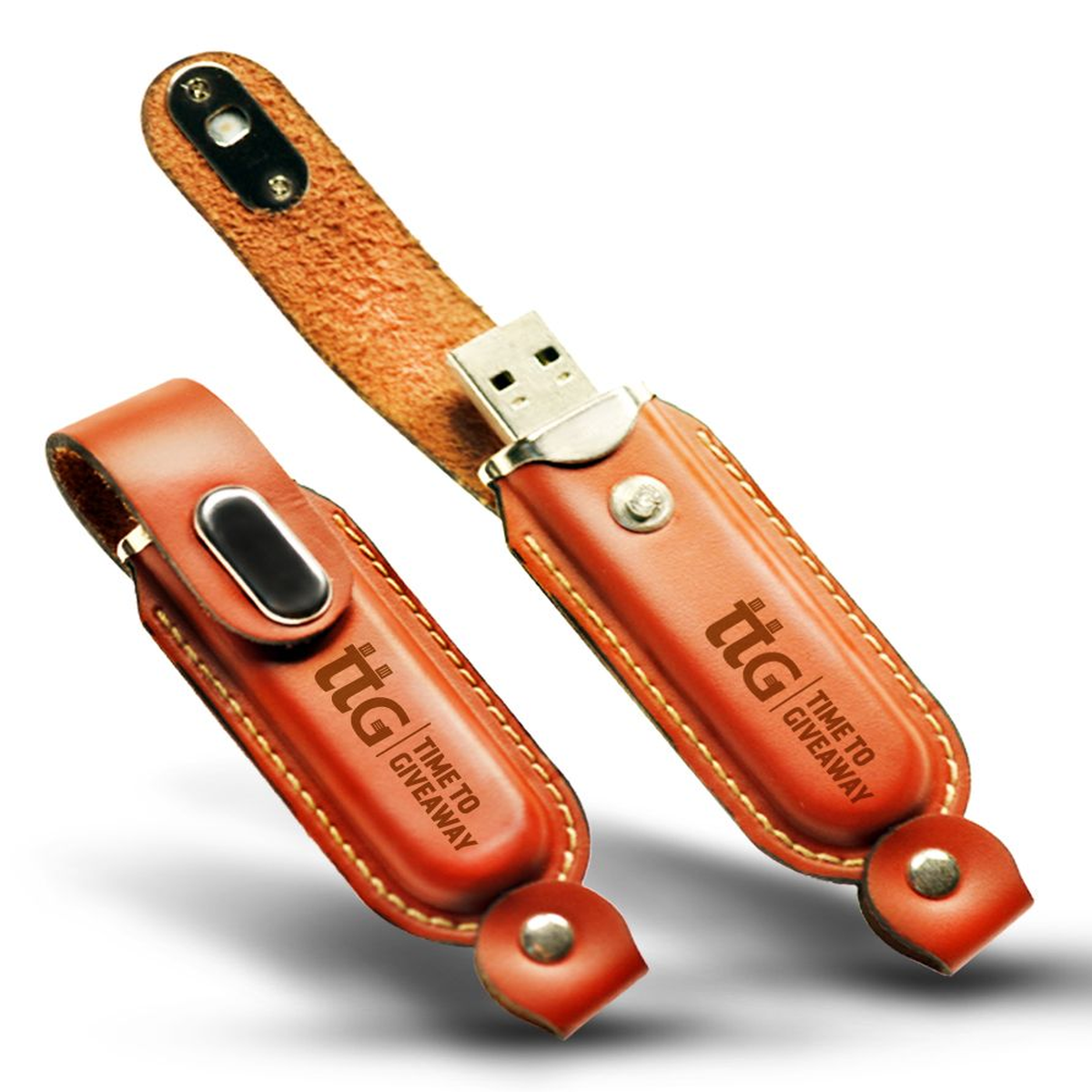
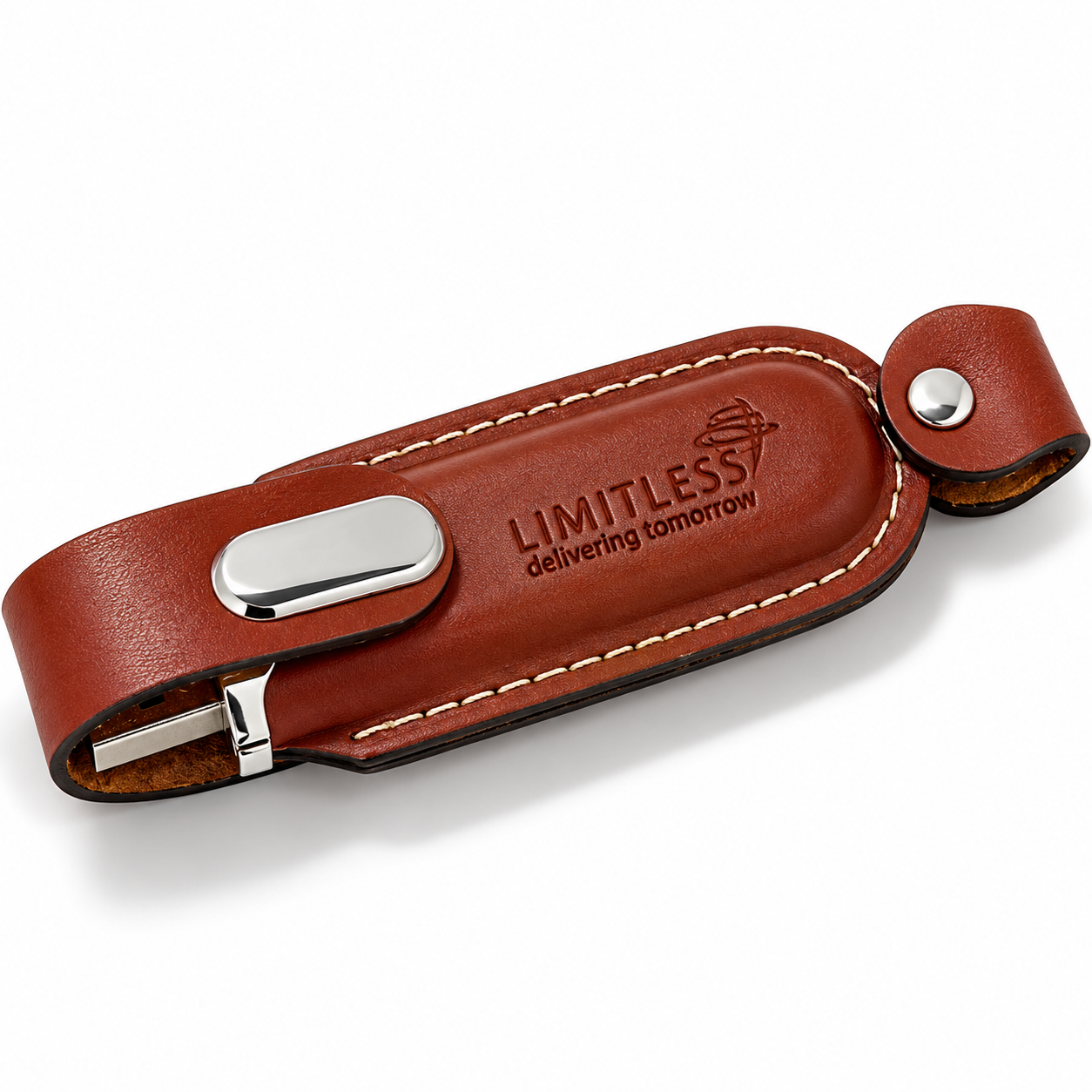
Leather USB flash drives are made by cutting and shaping a leather casing around a standard USB circuit board, then closing it with stitching, adhesive, or a metal frame before the logo is applied. The leather is what changes, not the drive inside. The memory chip, controller, and connector are the same components used in a metal or plastic drive. What you're really buying with a leather USB drive is a different casing and a different unboxing experience, not different storage technology.
That distinction matters when you're deciding whether leather is the right call for your order. If you need a drive that reads as a premium physical gift, leather earns its cost. If you just need reliable bulk storage at the lowest price per unit, it doesn't.
How a leather USB drive actually gets made
The process runs through eight stages, and knowing what to check at each one is more useful to a buyer than a generic overview.
- Material selection. The casing is specified as genuine leather, PU leather, or bonded/imitation leather, depending on budget and brand image (more on the differences below). Check which material category your quote is actually for, since the three differ in cost, batch consistency, and compliance disclosure requirements.
- Cutting and edge finishing. Leather panels are cut to size, and edges are finished — edge paint, folding, or binding, depending on the style. Check the edge finish on a physical sample, since it's one of the most visible quality signals on a leather product.
- PCB and connector assembly. The same memory chip, controller, and USB connector used in a metal or plastic drive is mounted on a small circuit board and tested before it goes anywhere near the casing. Check that this testing happens before assembly, not after, so a defective board never ends up sealed inside a finished leather case.
- Casing closure. The leather is shaped around the internal components and closed by stitching, adhesive, or a metal edge/frame, depending on the style — a flip case, a wristband, a keychain-attached case, or a rigid rectangular case all use the same core electronics with a different leather construction around them. Check which closure method your chosen style uses, since it affects both durability and repairability.
- Logo sampling. Branding method depends on what's being marked: a logo pressed into the leather itself is typically embossed rather than laser engraved, since a laser cuts into leather differently than into wood or metal and doesn't reliably hold fine detail. Multi-color logos use printing instead, since embossing doesn't add color. Exposed metal hardware or edges can be laser engraved separately. Check a physical sample of your specific logo on your specific leather choice before mass production — a digital mockup won't show you how embossing or printing actually reads on leather grain.
- Read/write testing. Drives are tested for data read and write function before packing. Ask what portion of a batch is tested (spot-check vs. every unit) and whether results are documented, rather than assuming "tested" means every unit.
- Visual inspection. Units are checked for stitching quality, edge finish, and surface defects before shipping. Ask for the supplier's inspection checklist and defect-rate tolerance rather than taking "quality checked" as a given.
- Packing and approval. Final packing happens after inspection sign-off. Ask whether you'll see a pre-shipment sample or photos for approval before the full batch ships, particularly on a first order with a new supplier.
If you want a fuller sense of what a supplier's testing and inspection process should cover before you commit to a bulk order, this guide to evaluating USB drive suppliers walks through what to ask for at each stage.
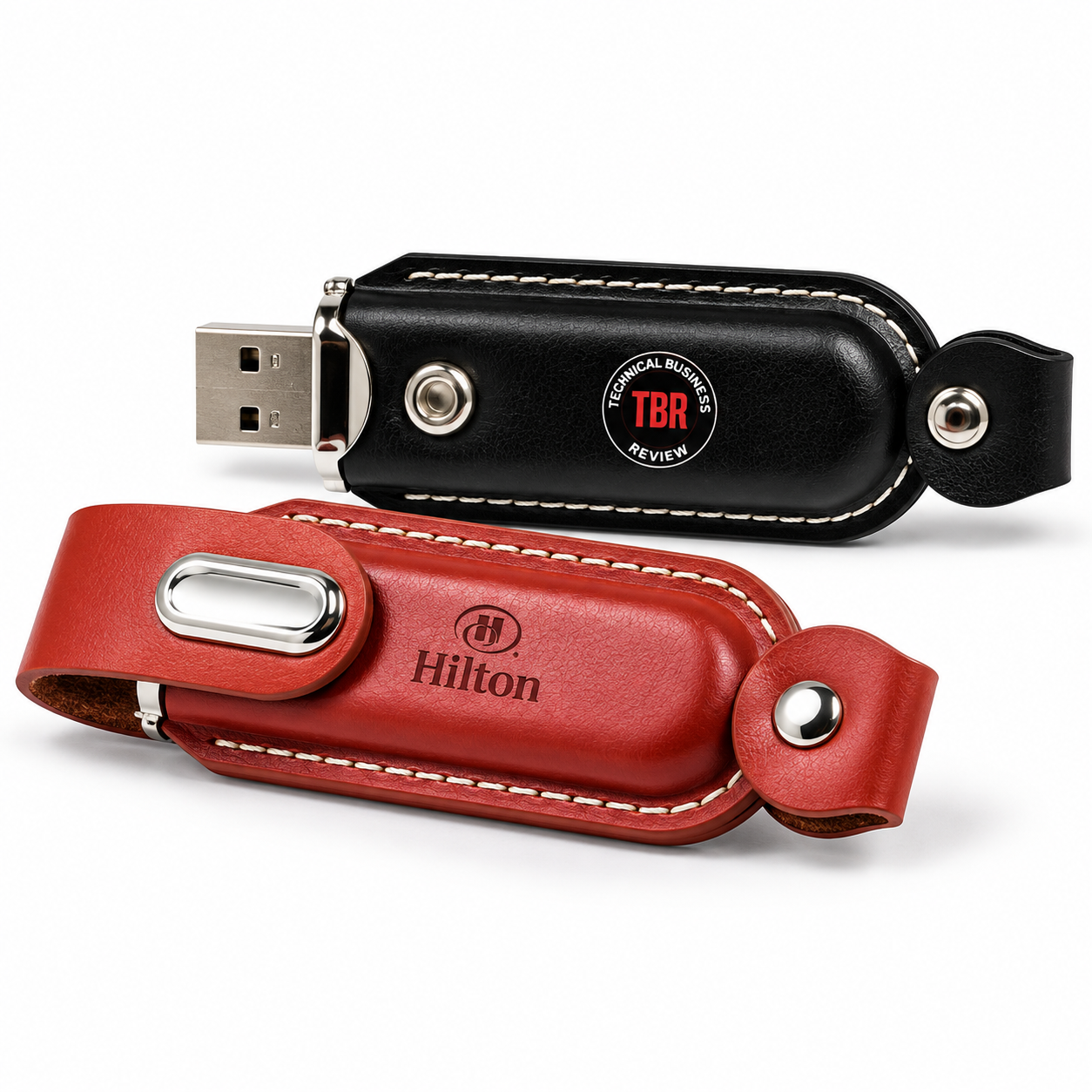
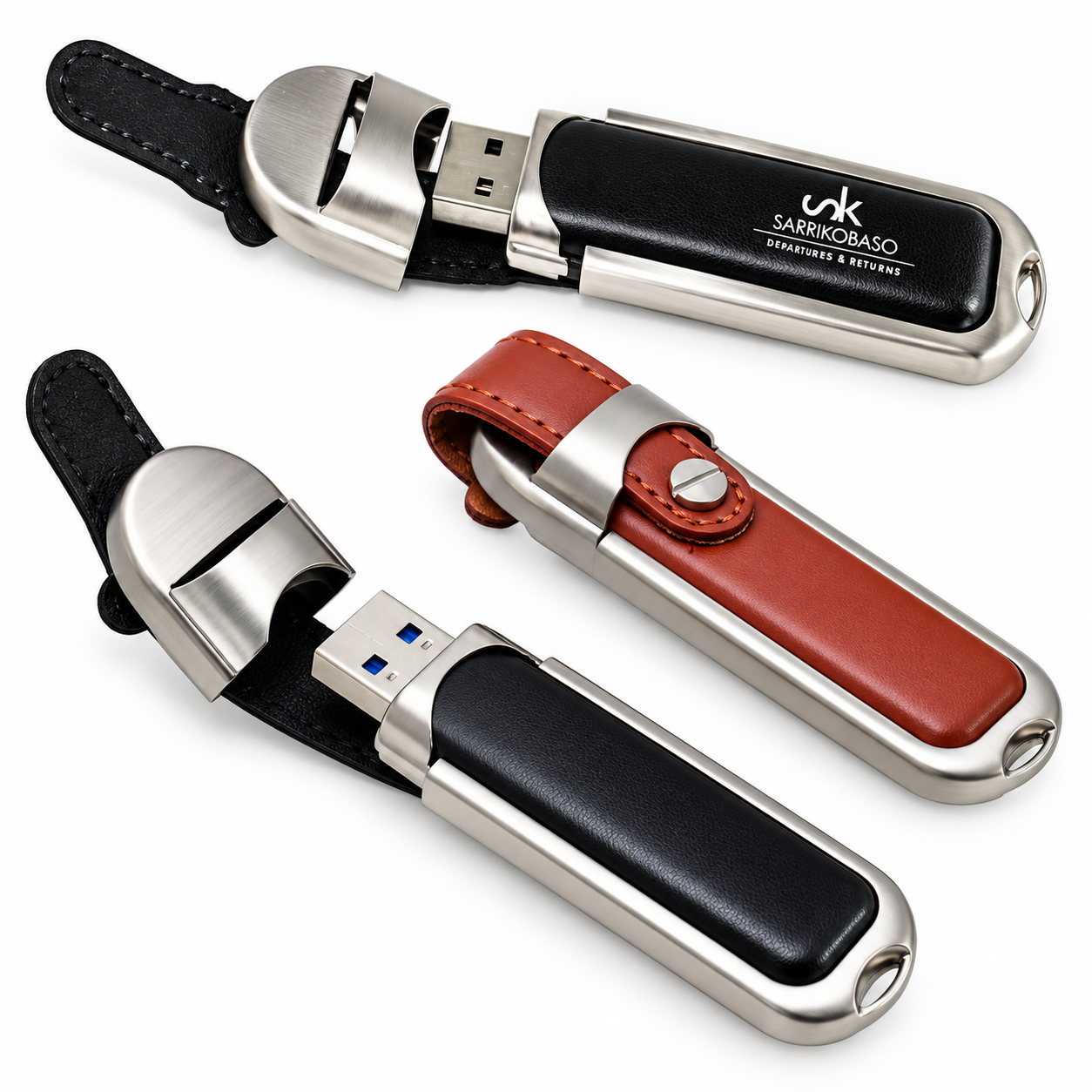
Genuine leather, PU leather, or bonded leather
These are three different materials, not interchangeable marketing terms, and the distinction matters for both cost and compliance.
Genuine leather costs more and develops an individual, worn-in look over time — that variation is part of the appeal for a premium gift, but it also means less batch-to-batch uniformity. PU leather holds a more consistent finish across a large run, which matters if you're ordering hundreds of units and want them to look identical. Bonded or imitation leather sits at the budget end, giving a leather-like look and feel without genuine hide.
Whichever material you're quoted, specify it explicitly and ask your supplier to confirm the material category in writing rather than accepting "leather" as a description on its own — the U.S. FTC's guidance on leather and imitation-leather marketing exists specifically because these terms get blurred, and misrepresenting an imitation material as genuine leather is a labeling issue, not just a quality one. If your order is bound for the EU or involves parts that sit against skin for extended periods (a wristband or bracelet-style drive, for example), also confirm chemical compliance — EU REACH restricts Chromium VI in leather articles under Regulation (EU) No 301/2014 — before finalizing production for that market.
None of the three materials affects the electronics inside. The memory chip and controller perform the same regardless of casing material, so the choice is entirely about budget, brand image, and compliance, not data performance.
| Material | Best for | Relative cost | Appearance consistency | Typical logo method |
|---|---|---|---|---|
| Genuine leather | Premium client or executive gifts, where an individual, aged look is part of the appeal | Highest of the three | Develops wear and patina over time — less uniform batch to batch | Embossing (single-tone); printing for multi-color |
| PU leather | Large bulk runs where every unit needs to look identical | Lower than genuine leather | High — consistent finish across a large order | Embossing; printing |
| Bonded / imitation leather | Budget-conscious orders where a leather look matters more than the material itself | Lowest of the three | High | Printing (holds fine detail best on this material) |
| Metal or plastic casing (for comparison) | Lowest cost per unit, or when leather's premium feel isn't the priority | Often the lowest overall | Fully uniform | Laser engraving; UV printing |
If leather isn't the right fit for your budget or use case, YOUSAN's metal USB drive line covers the fully-uniform, lower-cost end of the same comparison.
When leather USB drives are the right fit
Leather makes sense when the drive itself is part of the gift, not just the storage inside it. A few scenarios where that's usually true:
Corporate gifting for clients or executives, where a plastic drive would undercut the impression you're trying to make. A leather drive sitting next to a pen or a notebook in a gift set reads as intentional, not an afterthought.
Personalized gifts for weddings, anniversaries, or retirements, where initials or a short embossed message on leather feels more permanent than printed plastic.
Trade show giveaways aimed at a specific tier of contact, not the general foot-traffic crowd. Leather drives cost more per unit than standard plastic ones, so they work best reserved for higher-value leads rather than handed out at volume.
Retail or resale alongside other leather goods, where the drive needs to visually match a product line rather than stand apart from it.
If your priority is the lowest cost per unit for a mass giveaway, or you need thousands of units on a tight budget, a plastic or metal drive will usually serve you better. Leather is a deliberate upgrade, not a default choice.
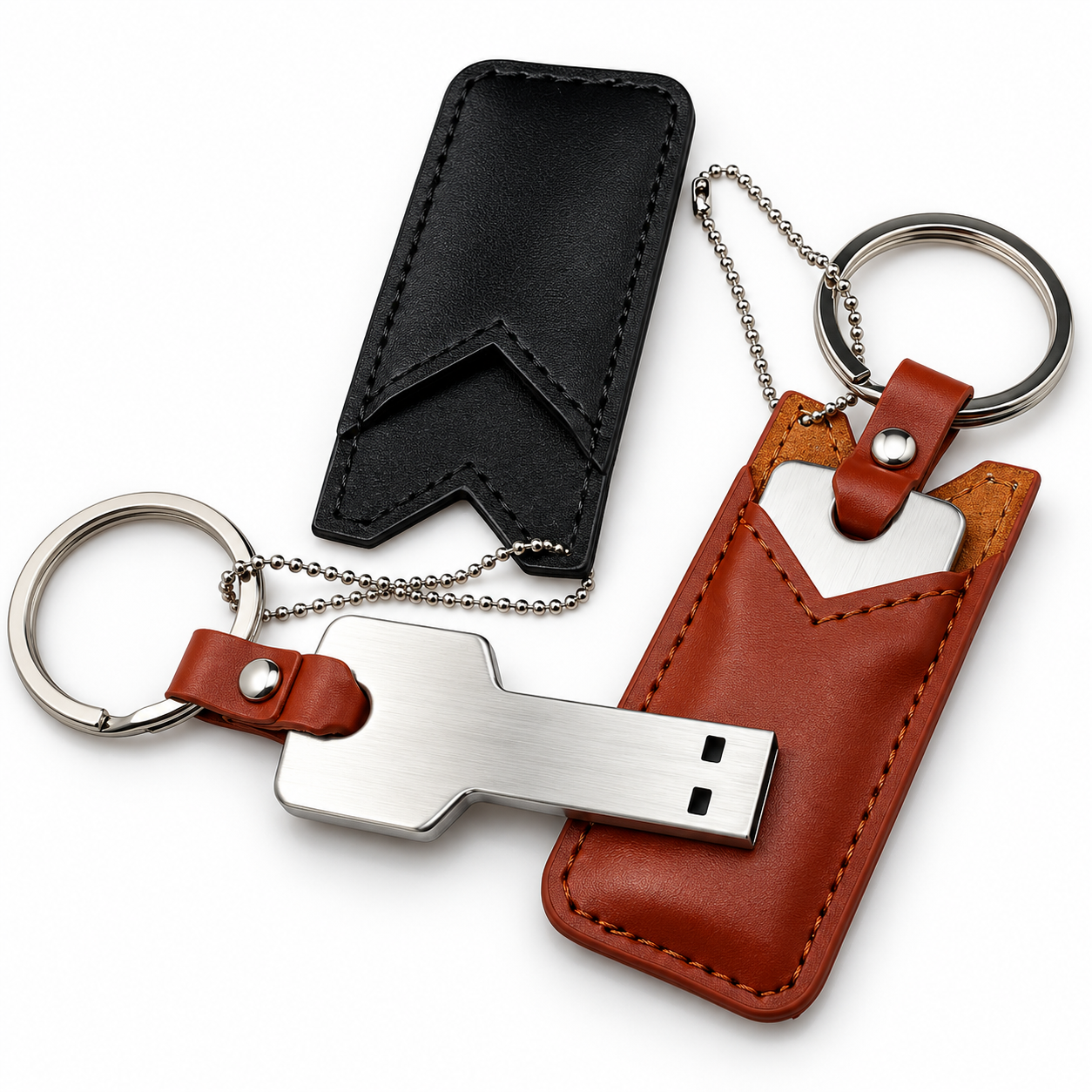
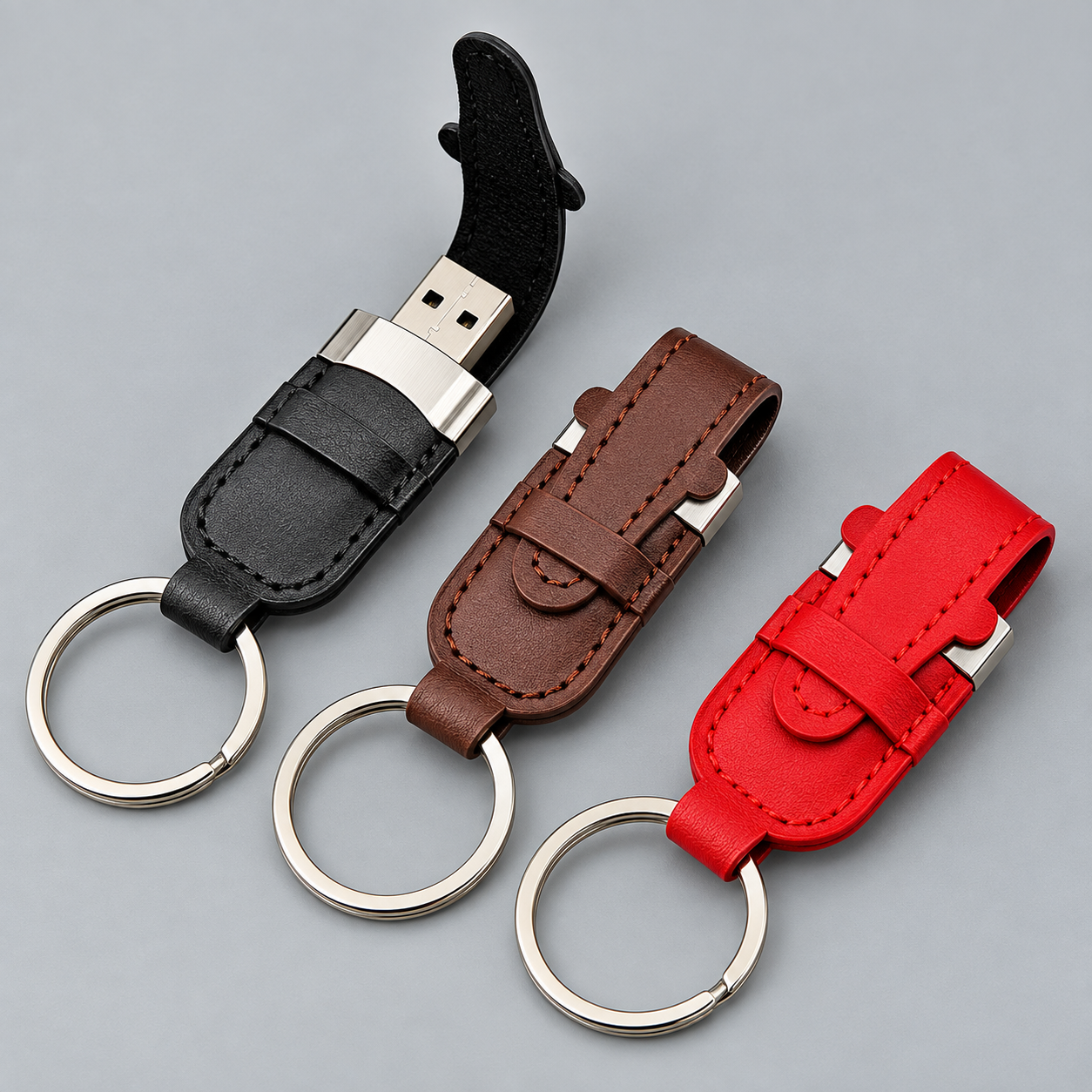
What to confirm before you order
The specifics below reflect YOUSAN's leather USB drive category page as listed in September 2026, but available capacity, MOQ, lead time, and warranty terms vary by model, memory chip, branding method, and current production schedule. Treat the figures as a starting point for your quote request, not a fixed commitment, and get the exact specification confirmed in writing before you order.
| What to ask about | What's generally offered | Confirm in writing |
|---|---|---|
| Capacity and interface | Reported range from 1GB up to 1TB, in USB 2.0 and USB 3.0 | Exact capacity and interface for your chosen model |
| Styles | 35+ styles listed, including keychain and anti-lost designs, wristband and bracelet formats, flip cases, rotating sleeves, and metal-edge cases | Which specific style your quote covers |
| Branding | Embossing, color printing, laser engraving on exposed metal hardware; Pantone-referenced color matching available | Which method fits your logo (see the logo sampling step above) |
| MOQ | Around 25 units as a standard minimum, with smaller runs sometimes negotiable | Confirmed MOQ for your specific style and material |
| Lead time | Roughly 7 to 15 business days after sample approval, plus 3 to 4 days for shipping, as a general range | A firm date once your order details, quantity, and current production load are known |
| Warranty | Electronics and flash chip warranty terms are typically offered on custom USB orders | The exact warranty period and what it covers, in writing, before you order |
If you're still deciding what capacity actually fits your use case, this storage capacity guide breaks it down by scenario rather than just listing numbers. If your logo has fine detail or multiple colors, review logo customization options across embossing, printing, and engraving before you finalize artwork, so you're not designing a mark that doesn't translate to leather.
Frequently asked questions
Is a leather USB drive as durable as a metal or plastic one?
The electronics inside are identical to any other USB drive, so data storage and lifespan aren't affected by the casing material. The leather casing itself holds up well to normal handling, though genuine leather will show wear patterns over years of use the way any leather product does, while PU and bonded leather stay more visually consistent over time.
Can you emboss a logo directly into the leather?
Yes, embossing is the standard method for a single-tone logo pressed into leather. A multi-color logo needs printing instead, since embossing doesn't add color. If your drive includes exposed metal hardware, that part can be laser engraved separately from the leather.
What's the minimum order for a custom leather USB drive?
Standard MOQ is generally around 25 units, with smaller runs sometimes possible depending on the style — confirm the exact figure for your chosen style and material rather than assuming it's fixed across the whole product line.
Genuine leather, PU leather, or bonded leather — which should I choose?
Genuine leather costs more and develops an aged look over time, which some buyers want for a premium feel, but it's less uniform batch to batch. PU leather holds a more consistent appearance across a large order. Bonded or imitation leather is the budget option with a similar look. Specify which one you're being quoted, since these are distinct materials with different compliance labeling requirements, not interchangeable terms for the same thing.
How long does a custom leather USB order take?
Typically in the range of 7 to 15 business days after you approve a sample, plus 3 to 4 days for shipping, though this is a general planning range rather than a fixed date. Confirm a firm timeline once your order details, quantity, and current production load are known.
Ready to spec out a leather USB order for your next corporate gift or trade show batch? Submit your quantity, material preference (genuine, PU, or bonded leather), and logo to request a sample and a firm quote.
 English
  Español de México
  Italiano
  Deutsch (Österreich)
  Русский
  Français
  Türkçe
  Bahasa Melayu