
Yes, you can order several capacities of wooden USB drive in one batch. Your real job isn't getting a factory to agree to it. It's making sure the 16GB units and the 64GB units don't end up in the same box with no way to tell them apart once they're engraved and wrapped.
Why mixed-capacity orders actually go wrong
A single-capacity order has one failure mode: the whole batch is right or the whole batch is wrong. A mixed order has dozens. Picture 500 units split three ways, 200 at 16GB for general staff, 200 at 32GB for team leads, 100 at 64GB for executives, all in the same wood finish, same engraving, same box style. Once the capacity label comes off a drive, or never went on in the first place, nothing about its casing tells you which tier it belongs to. The wood grain looks the same. The engraving looks the same. The only thing that's different is invisible, and it's exactly the thing your recipients will notice first when they plug it in and find half the files missing.
This isn't a hypothetical. A batch that ships without a reliable capacity marker puts the entire sorting job on whoever opens the box at the other end, usually your own warehouse team or your client's. That's hours of plugging in random drives to check what's actually on them, on a shipment that should have taken ten minutes to distribute.
One terminology note before you start specifying quantities: the capacity printed on a drive (16GB, for example) is a decimal figure, while your computer often reports storage in binary (GiB), which reads slightly lower for the same physical drive. That gap is normal and isn't a mixed-order problem. Keep it in mind so a slightly-lower-than-expected number on one tier doesn't get mistaken for a labeling error during your verification step.
Confirm the real capacity split before anything goes to production
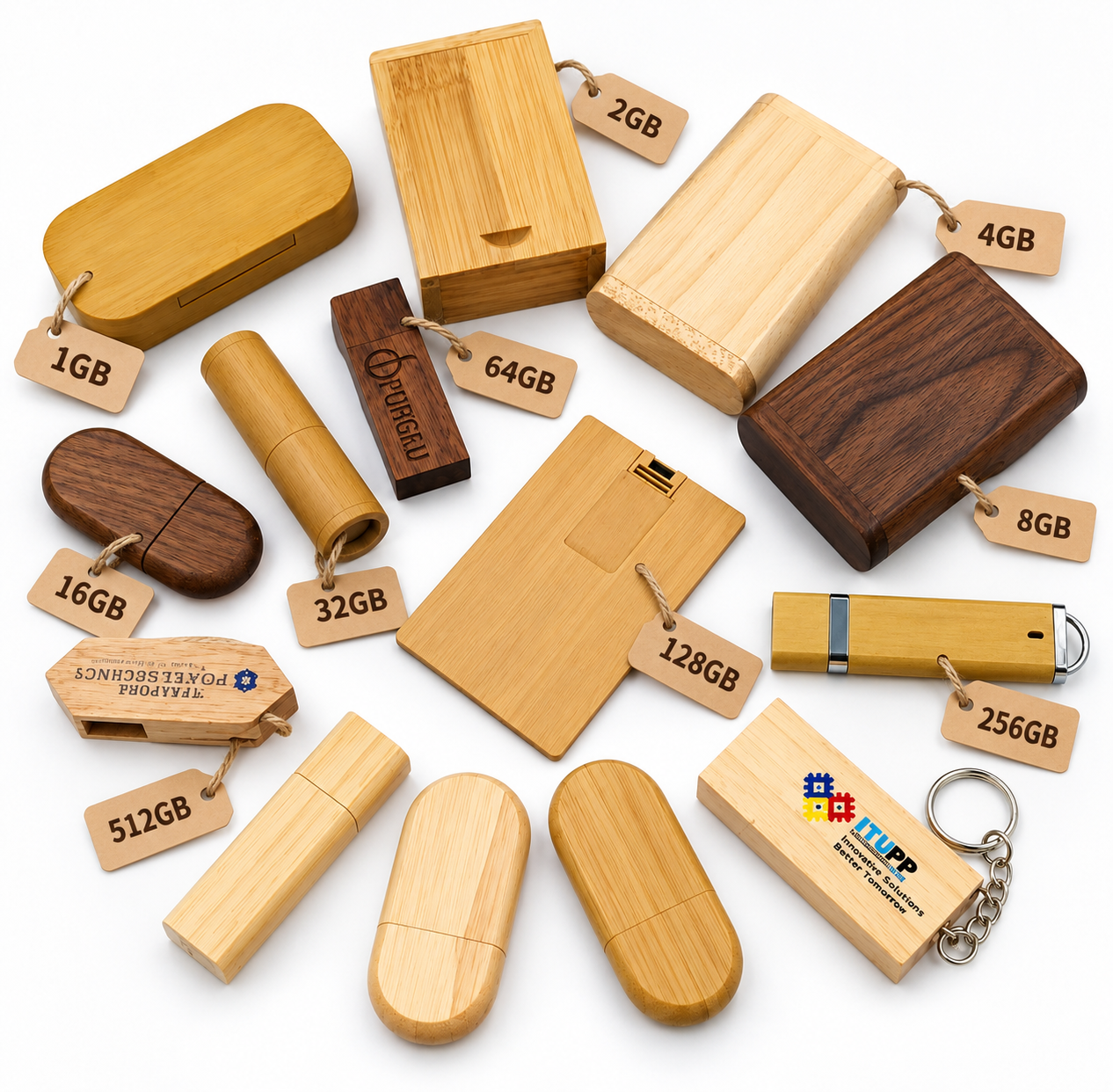
Get the exact quantity per capacity tier in writing before a single unit is engraved, not as a rough split you'll sort out later. This factory's promotional USB customization center lists ten standard capacity points for mixed orders, re-confirmed live as of October 2026: 1GB, 2GB, 4GB, 8GB, 16GB, 32GB, 64GB, 128GB, 256GB, and 512GB. Pick your tiers from that list, confirm the per-tier quantity, and get it written into the production order as separate line items, not a single combined unit count.
Treat each capacity as its own line item through the entire process, from quote to packing list. A quote that says "500 units, mixed capacities" tells your supplier almost nothing useful. A quote that says "200 units at 16GB, 200 at 32GB, 100 at 64GB" is something a production line can actually plan around, cost correctly, and pack without guessing.
Order confirmation template. Use this as the minimum written detail per tier, confirmed before production starts:
| Field | What to specify |
|---|---|
| Capacity tier | The exact labeled capacity (e.g. 32GB) |
| Quantity | Units at this tier only |
| Color or finish | The casing color or stain assigned to this tier |
| NAND type and controller | Confirmed per tier, not assumed identical across tiers |
| Test standard | The acceptance test and sample size for this tier |
| Chip/lot reference | The chip grade and production lot this tier is drawn from |
Mark every capacity tier before engraving starts, not after
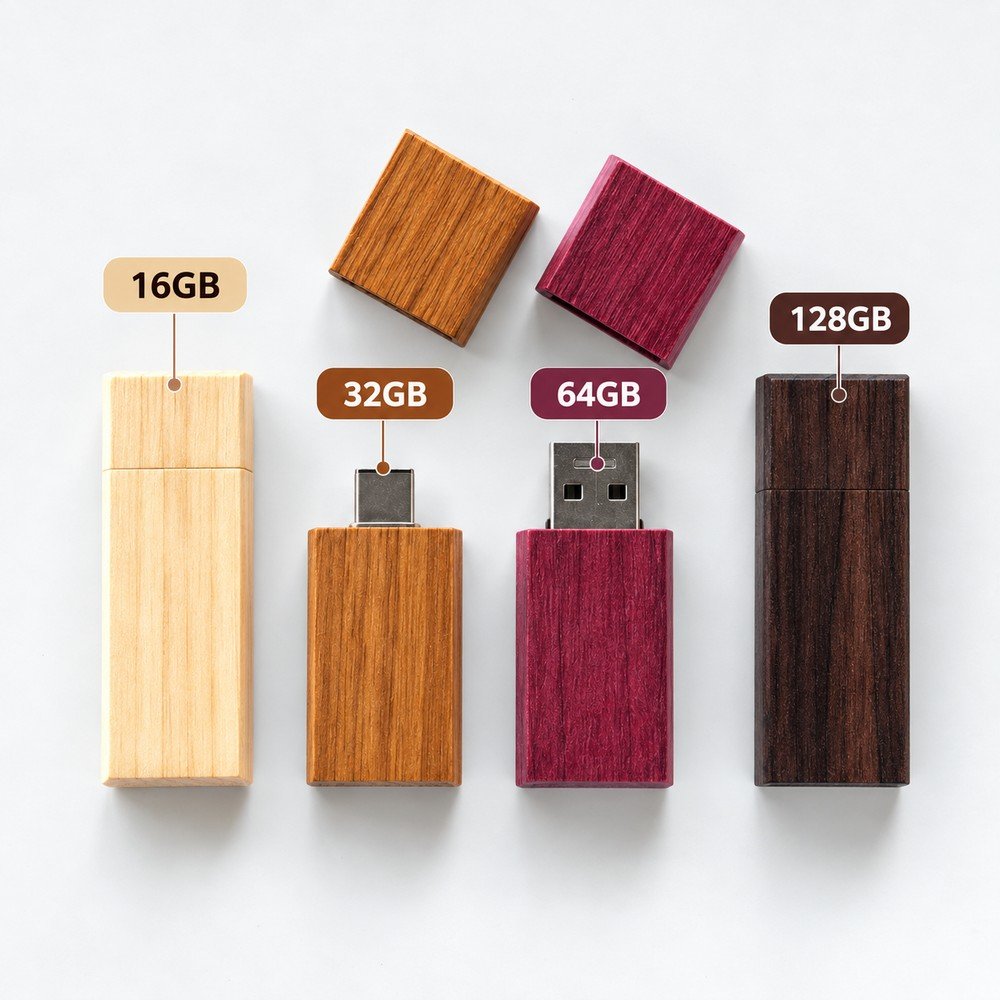
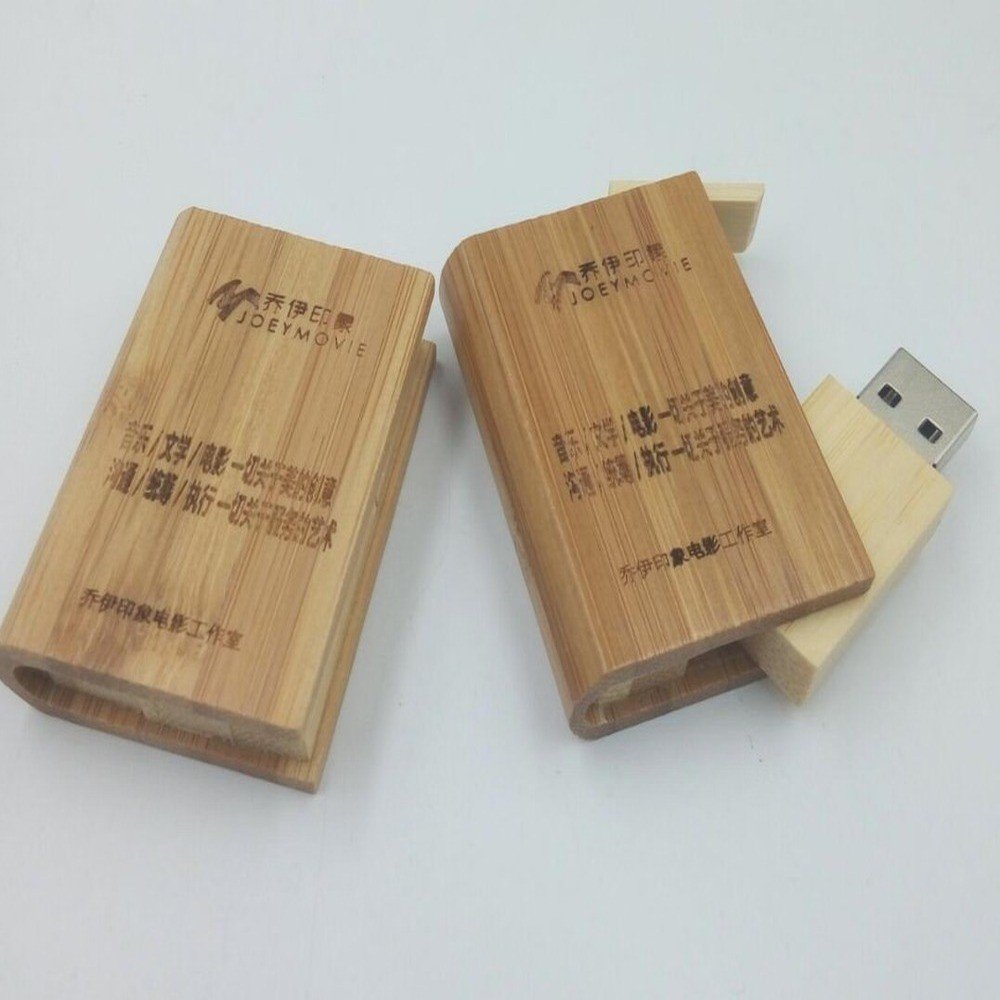
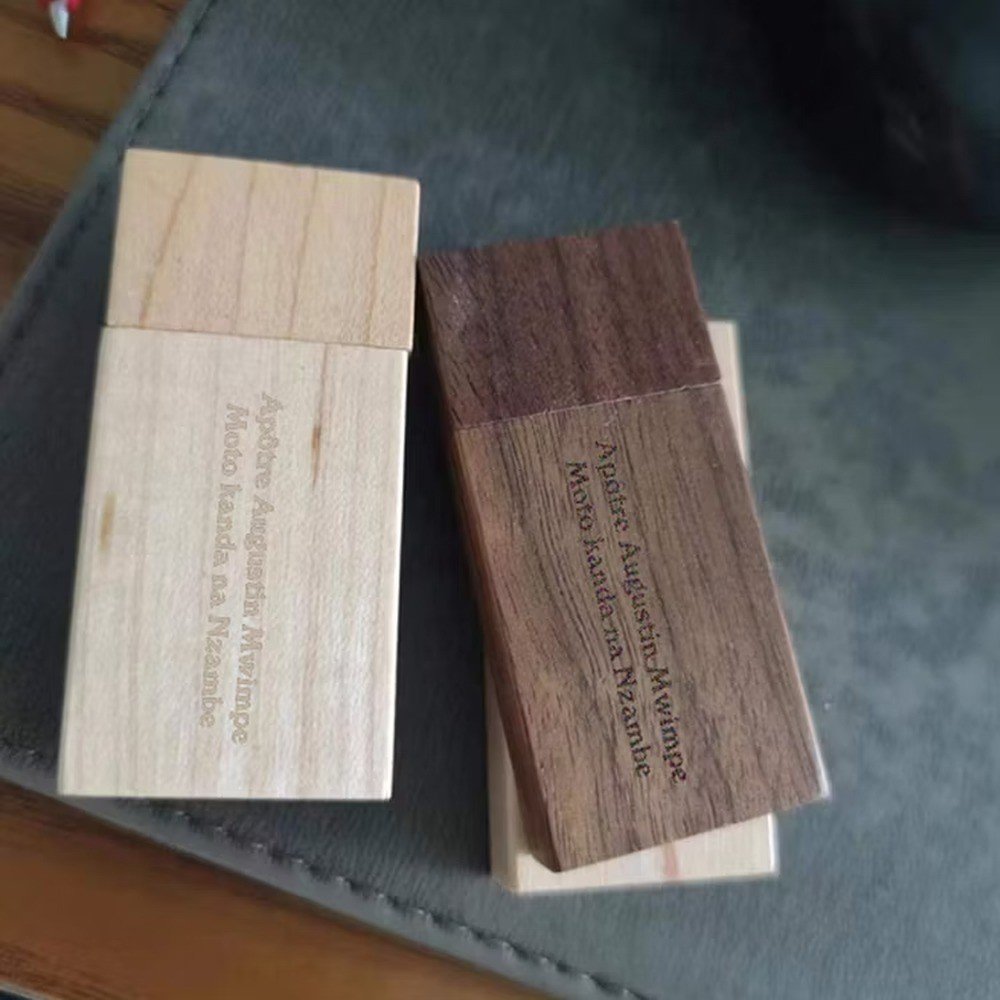
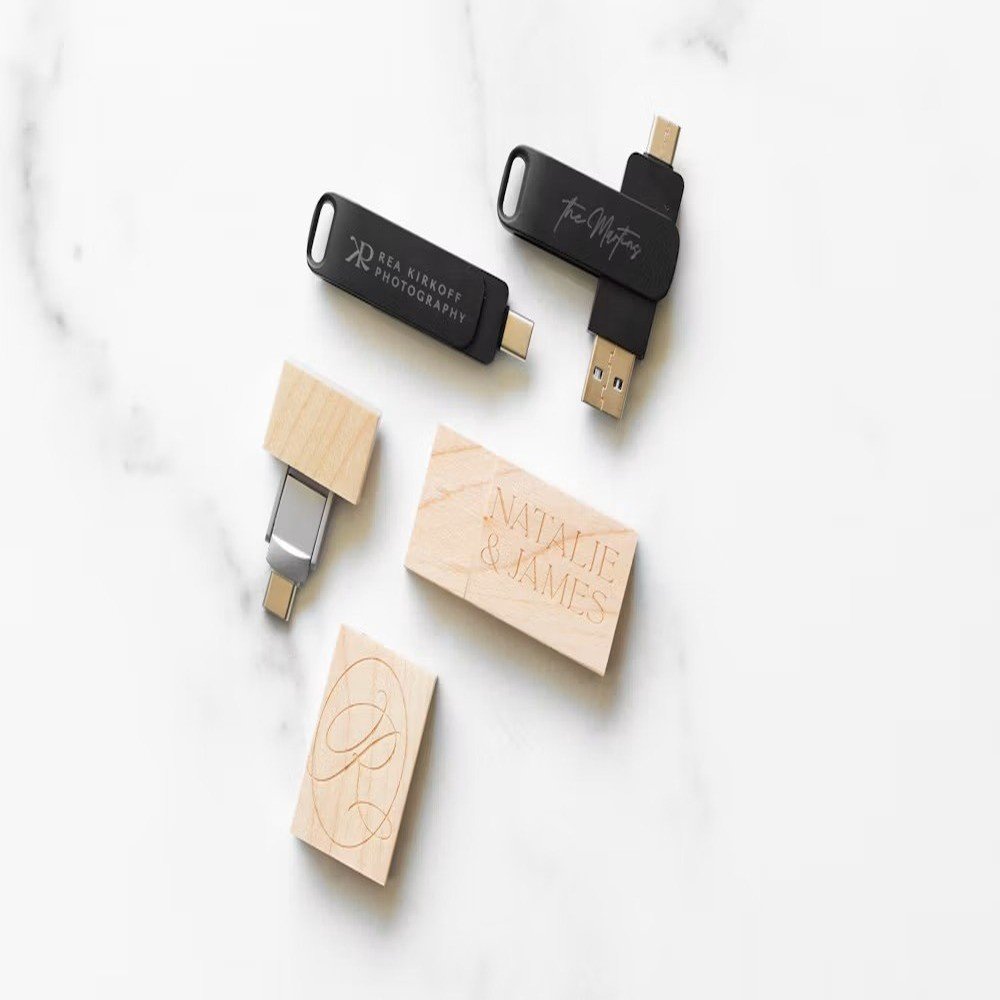
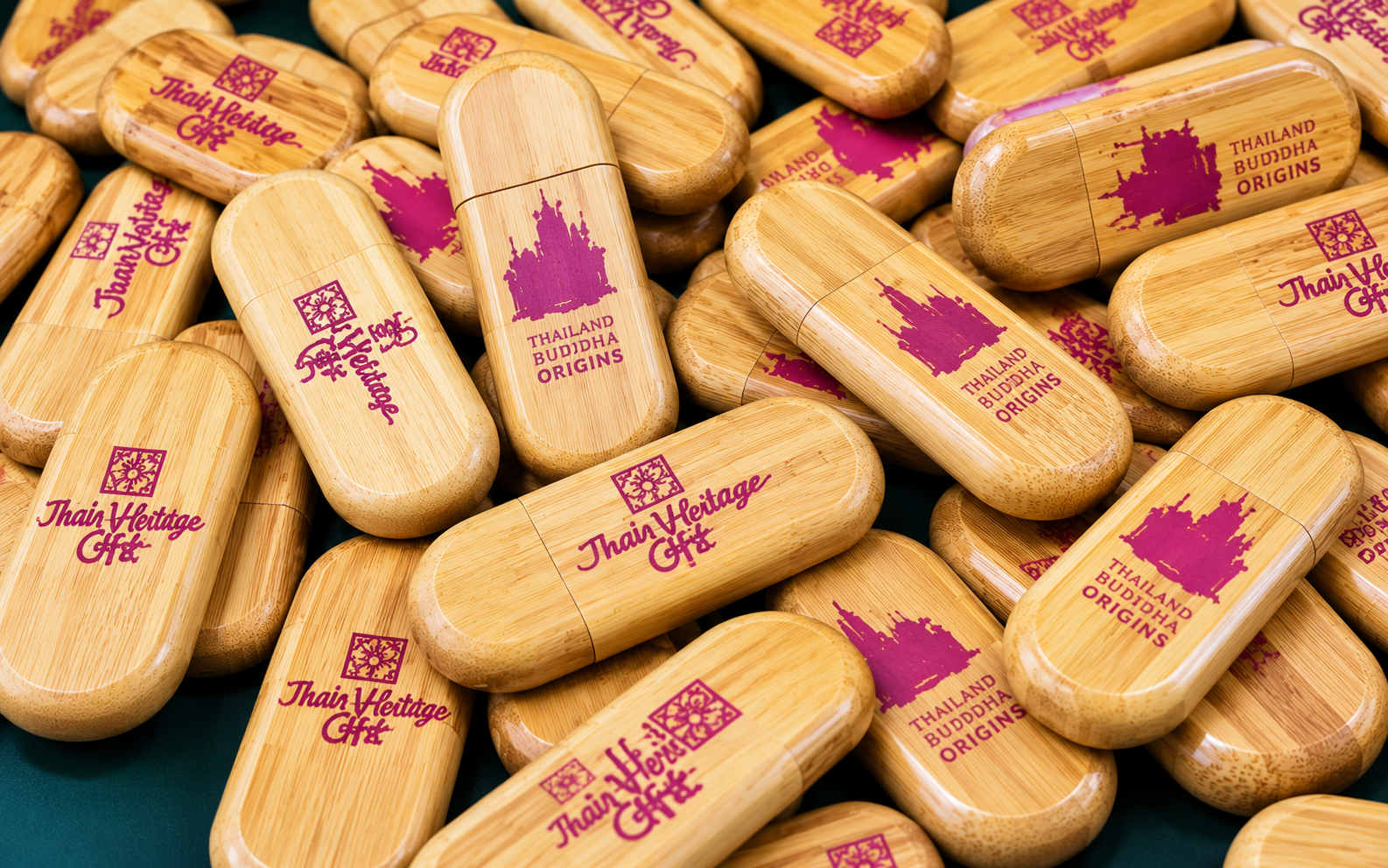
Color-coding helps buyers and packing teams tell capacity tiers apart at a glance, but treat it as one layer of identification, not the only one. Wood grain, stain-batch variation, and even the lighting in a warehouse can make two intended shades look closer together than they did on the approved sample, so color alone is a convenience, not a reliable sole identifier. Assigning one casing color or finish per tier, say a natural wood tone for 16GB and a darker stain for 32GB, still speeds up sorting, but confirm it against a physical sample for legibility and rub-resistance before production, the same way you'd confirm any other finish. Stickers can hold up fine depending on the adhesive and the handling the drive goes through. Don't assume either option performs a certain way without testing it on your actual order.
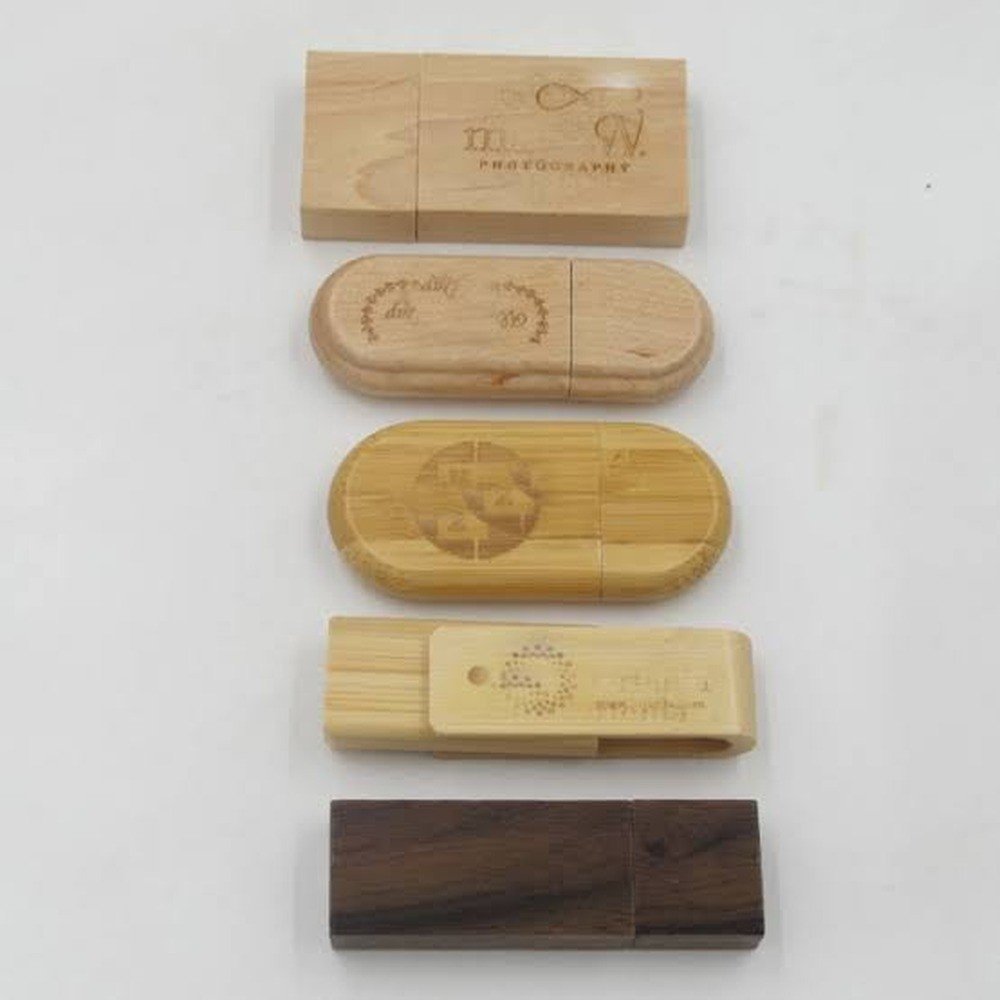
Back color-coding up with high-contrast capacity text engraved or printed directly on the casing, plus a capacity reference on the packaging. Laser-engraved text reads "32GB" in a clean, legible font on the flattest surface of the drive, the same surface your logo usually sits on, so confirm with your supplier how capacity marking and logo placement share that space before you approve artwork. For large orders, a capacity-specific barcode or QR code on the outer packaging adds a scannable check at the warehouse, catching a mis-sorted unit before it ships rather than after a client complains. Color, text, and a packaging barcode together give you three independent checks instead of one, so a failure in any single method doesn't leave a tier unidentifiable.
Don't let capacity mixing turn into chip-quality mixing
A mixed-capacity order changes the storage size per tier. It shouldn't change the quality grade of the chip used. That said, don't expect every tier to use a literally identical chip. Different capacities commonly call for different NAND configurations or controller specifications to address the larger or smaller space correctly, and that's normal, not a red flag on its own. What you're actually confirming is that every tier is built to the same quality grade and tested to the same acceptance standard, not that a 16GB unit and a 512GB unit share the exact same part number.
Ask your supplier for the specification sheet and NAND/controller details for each tier, not just a verbal assurance that "it's all the same quality." Request lot traceability so a quality issue on one tier can be traced back to its specific production run, and ask for test records rather than taking a confirmation at face value. This matters more on a mixed order than a single-capacity one, since a quality gap between tiers is easy to miss when you're already expecting the drives to differ by size.
Pack by capacity, not by convenience
Compartmentalized trays or cartons, one compartment per capacity tier, stop units from different tiers touching during packing and transit. If your order includes individual gift boxes (see this project's own packaging guide for sizing those boxes correctly), pack and seal each capacity tier's boxes together before mixing cartons for shipment, not after.
A packing list that states quantity per capacity tier, matched against the actual carton contents, is your last check before the shipment leaves the factory. This is the same discipline this project's guide to engraving different names in one batch recommends for a personalized order: list the expected contents per unit, then verify the physical contents match that list before sign-off, rather than trusting the count alone.
Verify before you approve the shipment
Testing one unit per tier catches an obvious problem, like a unit that was mislabeled or clearly undersized, but it can't tell you whether a batch of 200 units at that tier is actually consistent. Agree on a real sampling plan with your supplier instead: a defined sample size per tier (not a flat "one unit"), a failure threshold that triggers a wider recheck, and a clear rule for who's responsible for a retest or a return if a sample fails.
Confirm actual capacity with testing software such as H2testw, which writes data across the full drive and verifies it reads back correctly. H2testw runs on Windows only, so confirm your testing setup can run it, or ask your supplier which tool they use if you're verifying on a different operating system. Keep the test log from each sample you run. It's your evidence if a dispute comes up later, not just a pass/fail note. A labeling error and a genuine capacity-fraud chip look identical from the outside, which is exactly why a defined sampling plan matters more than a single spot-check.
Mixed-capacity order risks at a glance
| Risk | Common cause | Fix | What to confirm |
|---|---|---|---|
| Capacity tiers indistinguishable after packing | No redundant identification before boxing | Combine color/finish, engraved capacity text, and a packaging barcode per tier | Which identifiers map to which capacity, confirmed on a physical sample |
| Capacity label missing or illegible | Label placed where it conflicts with logo or wears off in transit | Laser-engraved or high-contrast capacity text on the flattest casing surface | Label and logo placement share the surface without overlap, confirmed on a sample |
| A tier is built to a lower quality grade than agreed | Cost-cutting on one tier without buyer sign-off, or unclear NAND/controller terms | Confirm NAND type, controller, and test standard per tier, in writing, with a spec sheet | Spec documentation and lot traceability for every tier, not a verbal assurance |
| Units from different tiers mixed in one carton | No compartmentalized packing by tier | Pack and seal each capacity tier separately before combining cartons | Packing list states quantity per tier, matched against carton contents |
| A mis-sorted or faulty unit ships anyway | No defined sampling plan, just a single spot-check | Agree a sample size, failure threshold, and retest/return rule per tier before production | A written sampling plan, not just "test one unit," plus retained test logs |
Scope note: the color-coding, labeling, and compartmentalized-packing methods above reflect general bulk-electronics industry practice, not a published factory standard. No universal capacity-marking method is confirmed on the live site for wooden drives specifically, so confirm your supplier's actual method in writing before production. For a fuller breakdown of what each capacity actually holds, see this USB storage capacity guide.
Mixed-Capacity Wooden USB Order FAQ
Can I really mix capacities in one bulk wooden USB order?
Yes. The customization center linked above lists mixed-capacity orders across ten standard sizes, from 1GB up to 512GB, as a normal part of the OEM process. Confirm your exact per-tier quantities and get them written as separate line items before production starts.
Does mixing capacities raise my per-unit price?
It can, since each capacity tier has its own chip cost and the factory has to manage more than one production line within the same order. Ask for pricing broken out by tier in your quote, not a single blended number, so you can see exactly what each capacity is actually costing you.
How do I know a lower-capacity unit hasn't been given a lower-quality chip to save cost?
Ask for the specification sheet, NAND and controller details, and test records for every tier, not just a verbal confirmation. Request a defined sample from each tier for capacity testing before you approve the shipment, with the sample size and failure threshold agreed in advance, and keep the test logs as your documentation.
What's the minimum order quantity for a mixed-capacity wooden order?
The standard wooden USB minimum sits at 100 pieces total, re-confirmed live as of October 2026. Whether that minimum applies per capacity tier or across the combined order varies by supplier, so confirm this specific point before you plan your tier split.
Should every capacity tier get the same wood finish and engraving?
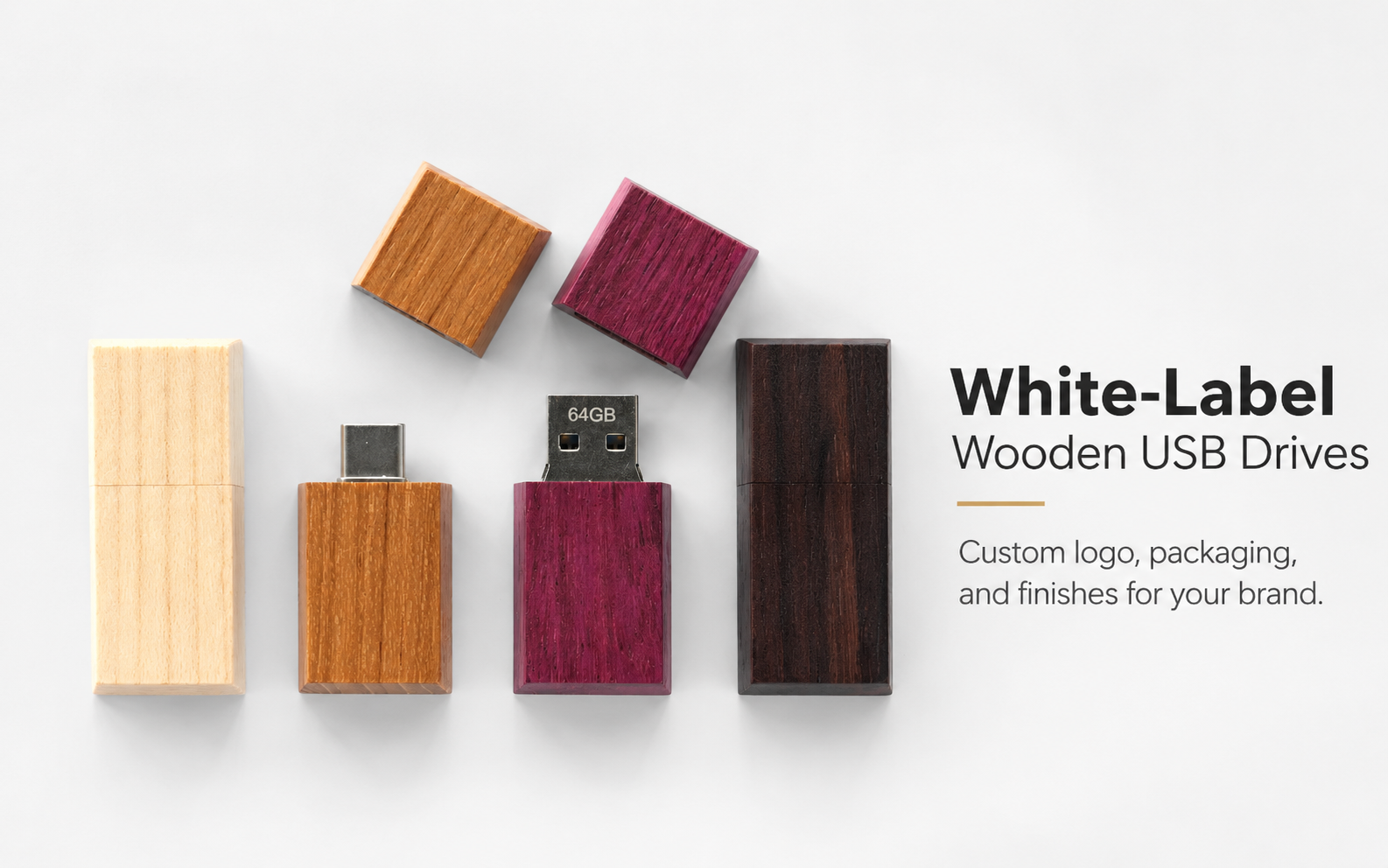
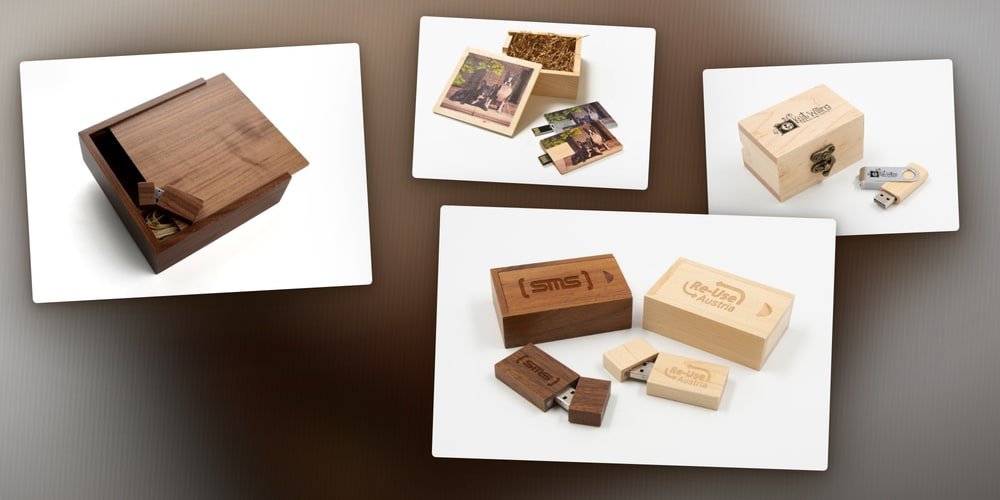
Not necessarily, and sometimes the opposite is the point. Some buyers deliberately vary the finish by tier, a lighter wood for one capacity, a darker stain for another, specifically so the capacity is visible without reading a label at all. Decide this with your supplier before production, and confirm the finish difference is actually distinguishable on a physical sample, since it affects both your labeling plan and your artwork files.
 English
  Español de México
  Italiano
  Deutsch (Österreich)
  Русский
  Français
  Türkçe
  Bahasa Melayu