
Custom USB flash drives typically cost $1.50 to $10.00 per unit FOB China, and six things decide where you land in that range: storage capacity, casing material, logo method, order quantity, packaging, and whether you need a custom mold shape. None of those numbers are locked in until you get a current quote, since flash memory prices shift with the chip market, sometimes week to week. Treat every figure below as a planning range, not a guaranteed price.
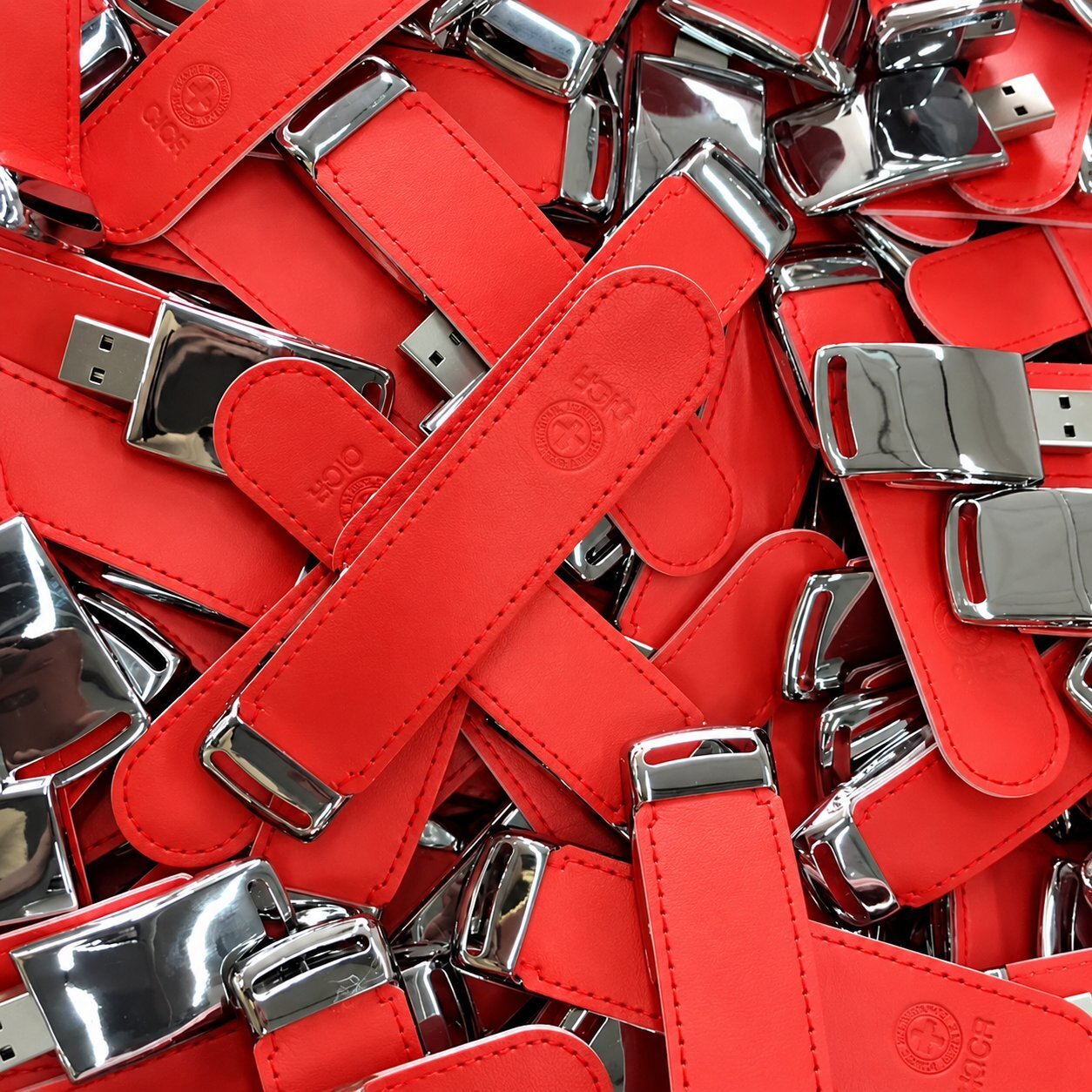
Six factors sit behind every custom USB quote you get. Each one moves your per-unit price independently, and most of them interact in ways that aren’t obvious until you’ve priced a real order. The factors below are listed in roughly the order they tend to swing a quote, starting with the one that moves fastest: the flash chip market itself.
What moves your price, factor by factor
1. Storage capacity
Flash chip prices move with the memory market, not with any single factory’s price list, so the same capacity can cost noticeably more or less depending on when you order. As a rough planning range: 8GB typically runs $1.50 to $3.00 per unit, 16GB $1.80 to $3.50, 32GB $2.00 to $4.00, 64GB $3.00 to $6.00, and 128GB $5.00 to $10.00. Get these confirmed against a current quote before you build a budget around them, since a quotation is usually only valid for about a week.
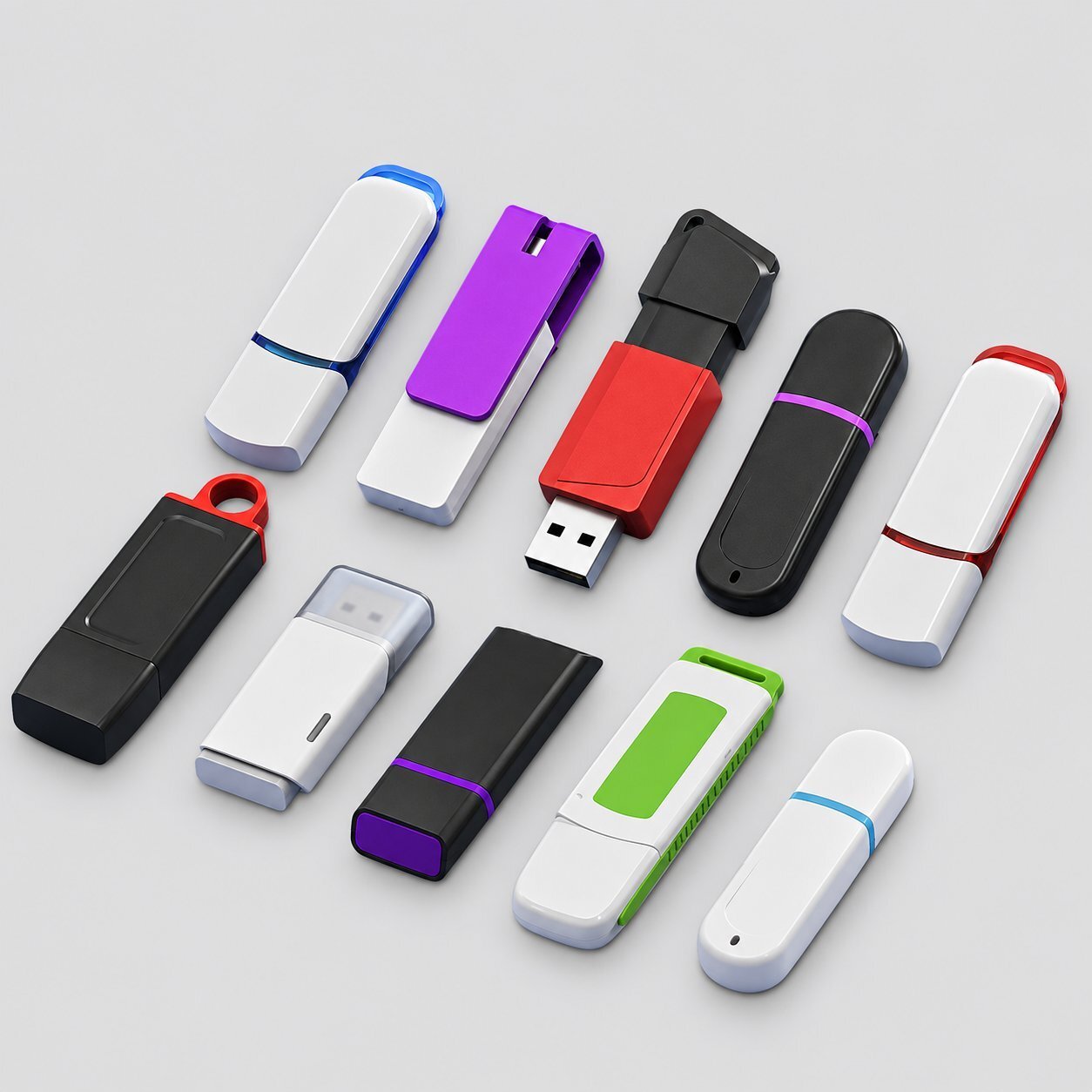
Interface matters too. A USB 3.0 drive typically costs 20% to 50% more than the same drive in USB 2.0. If your recipients move large files regularly, that premium is worth it. For brochures, PDFs, and presentations, USB 2.0 usually does the job for less.
Before you commit to a capacity or a supplier, ask whether the drive uses Grade A chips with full pre-shipment testing or a mixed grade of memory. A drive built on untested chips can fail well before a properly graded one does, and the cost of replacing a bad batch after branding almost always outweighs what you saved on the unit price. A factory that can point to a real testing process, and a track record measured in years rather than months, is worth the extra scrutiny before you place a large order.
2. Casing material
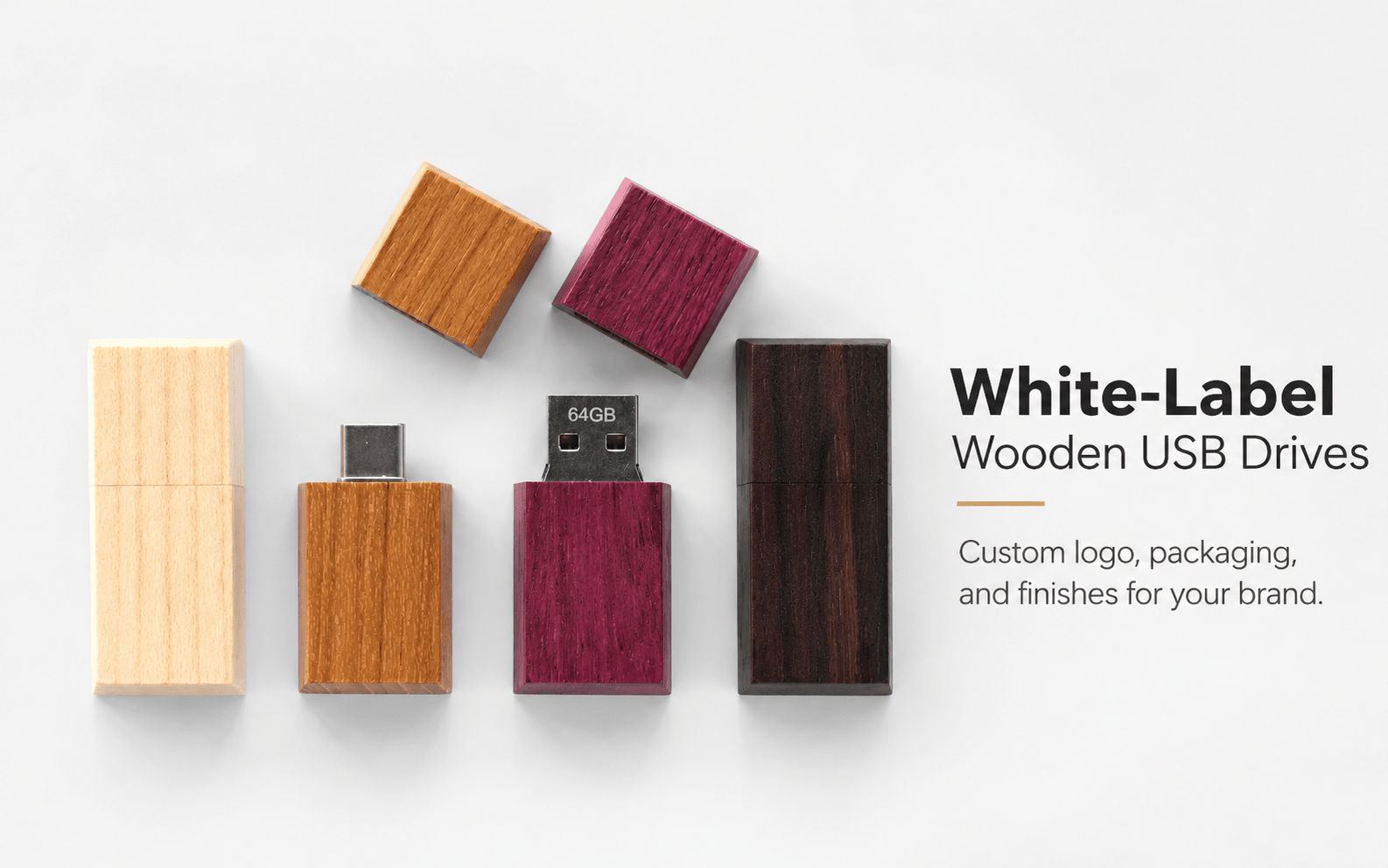
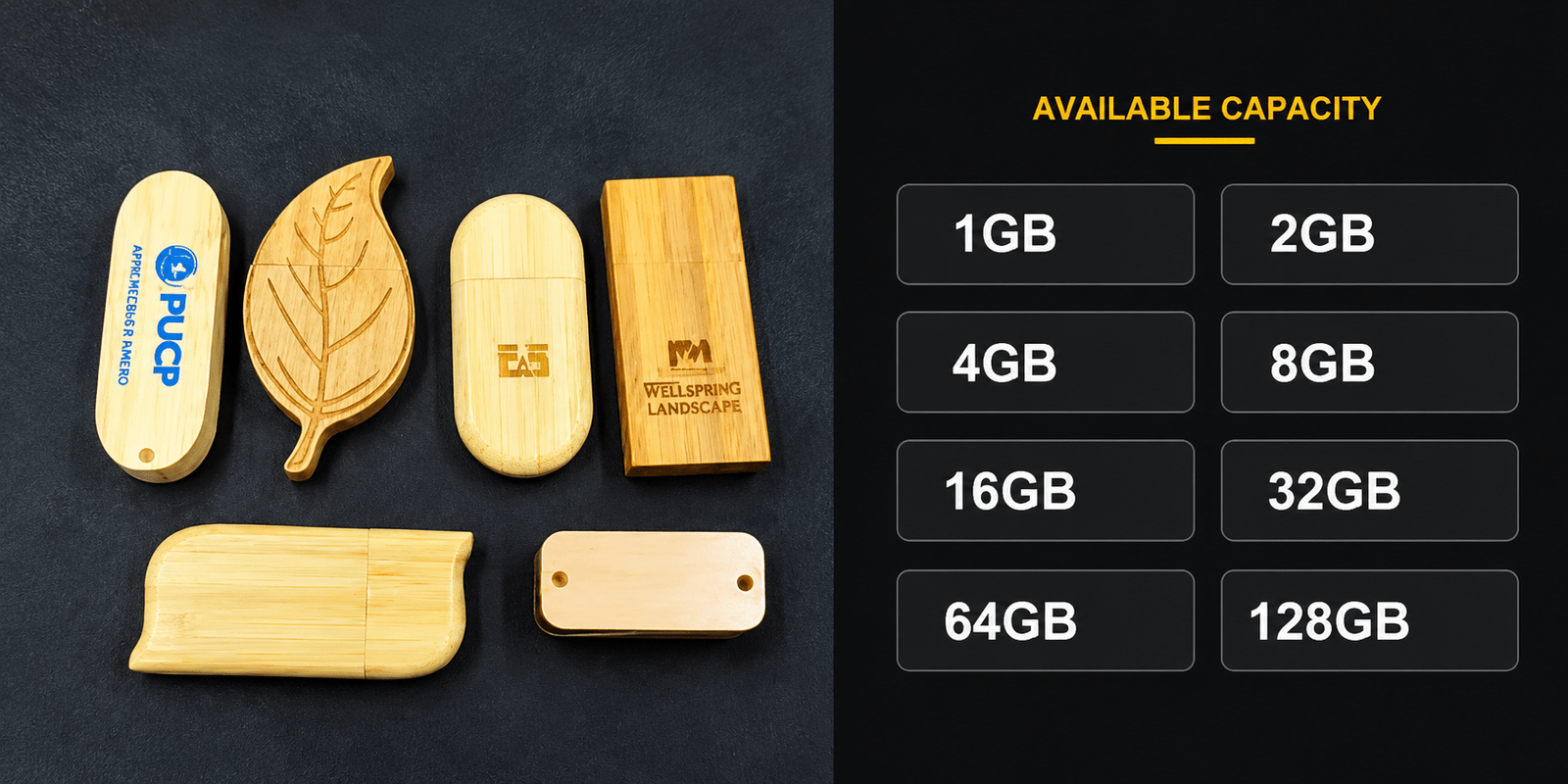
Your casing choice affects unit cost and how the gift is perceived. Plastic stays the cheapest option because factories buy the shells in volume, and the material itself adds almost nothing to your FOB price. Metal shells typically add $0.30 to $1.20 per unit depending on finish and weight. wooden USB drives typically add $0.50 to $2.00 above a standard plastic build.
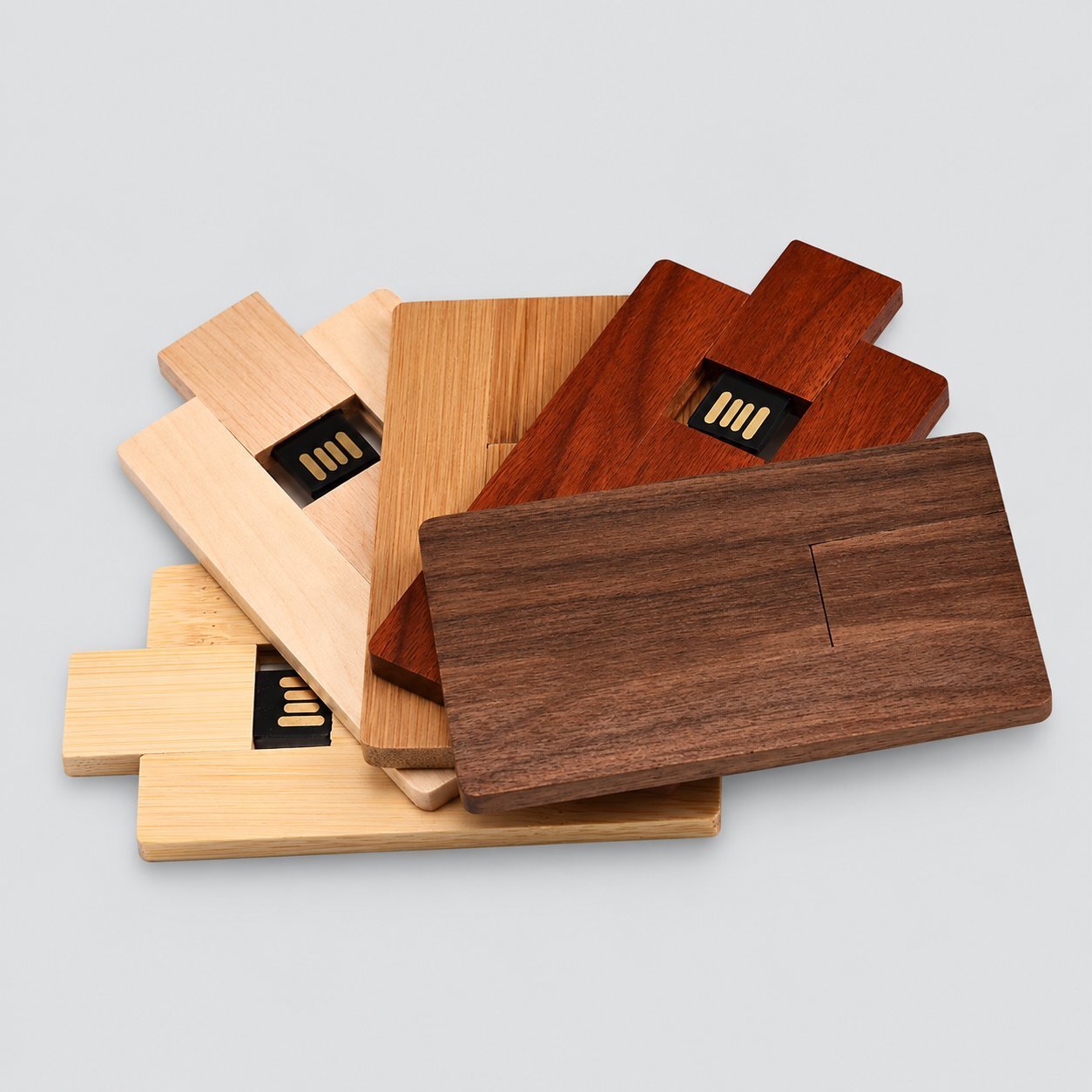
plastic USB drives usually give you the best price-to-unit ratio for large-scale giveaways like school or conference orders. metal USB drives read as more premium but weigh more, and if you’re shipping thousands of units, that extra weight can push freight cost up by more than 10%. Wood tends to work well for gifts that get photographed or presented in person, since it reads as considered rather than mass-produced, even at a moderate price point.
3. Logo and branding method
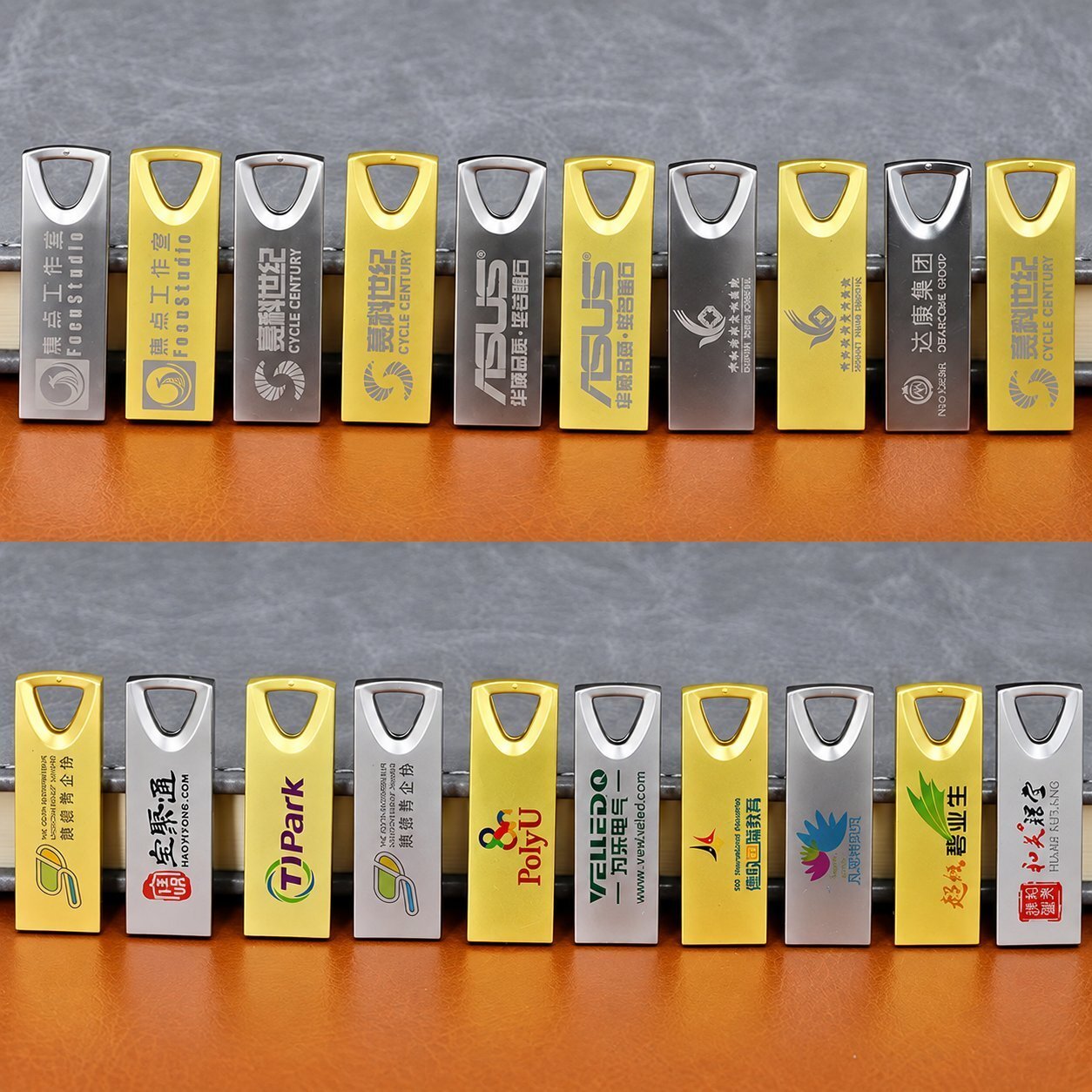
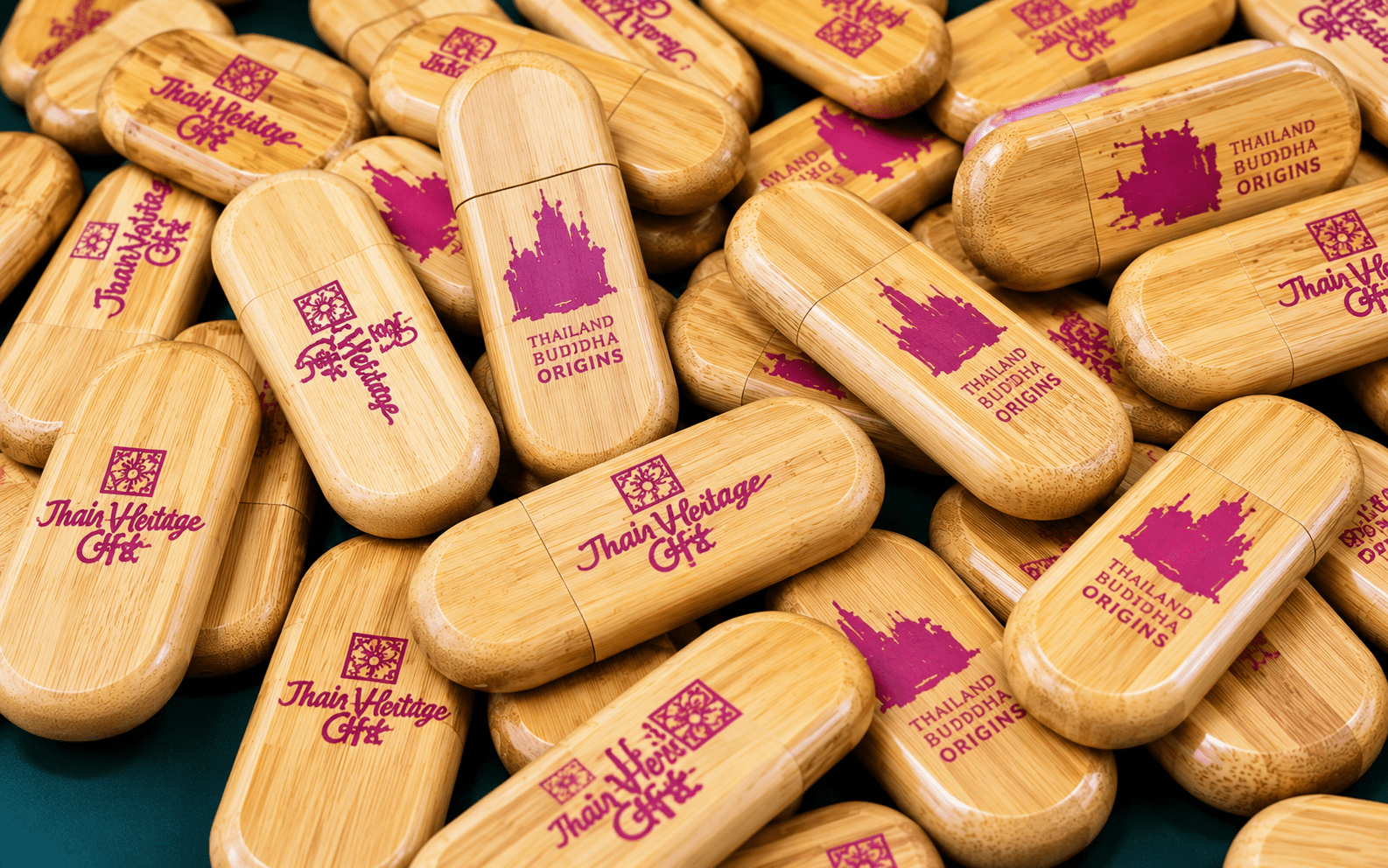
The branding method affects price more than most buyers expect going in. Most MOQ-level quotes already include a single-color print at the base FOB price. Full-color UV printing costs more, typically $0.10 to $0.80 extra per piece depending on volume and surface complexity.
Screen printing still handles the bulk of large orders well and works best on flat, clean logos. Pad printing is the practical choice for curved or uneven surfaces where screen printing can’t lie flat. laser engraving costs more upfront but etches the logo into the case instead of applying it on top, so it holds up to handling better over time, particularly on metal drives.
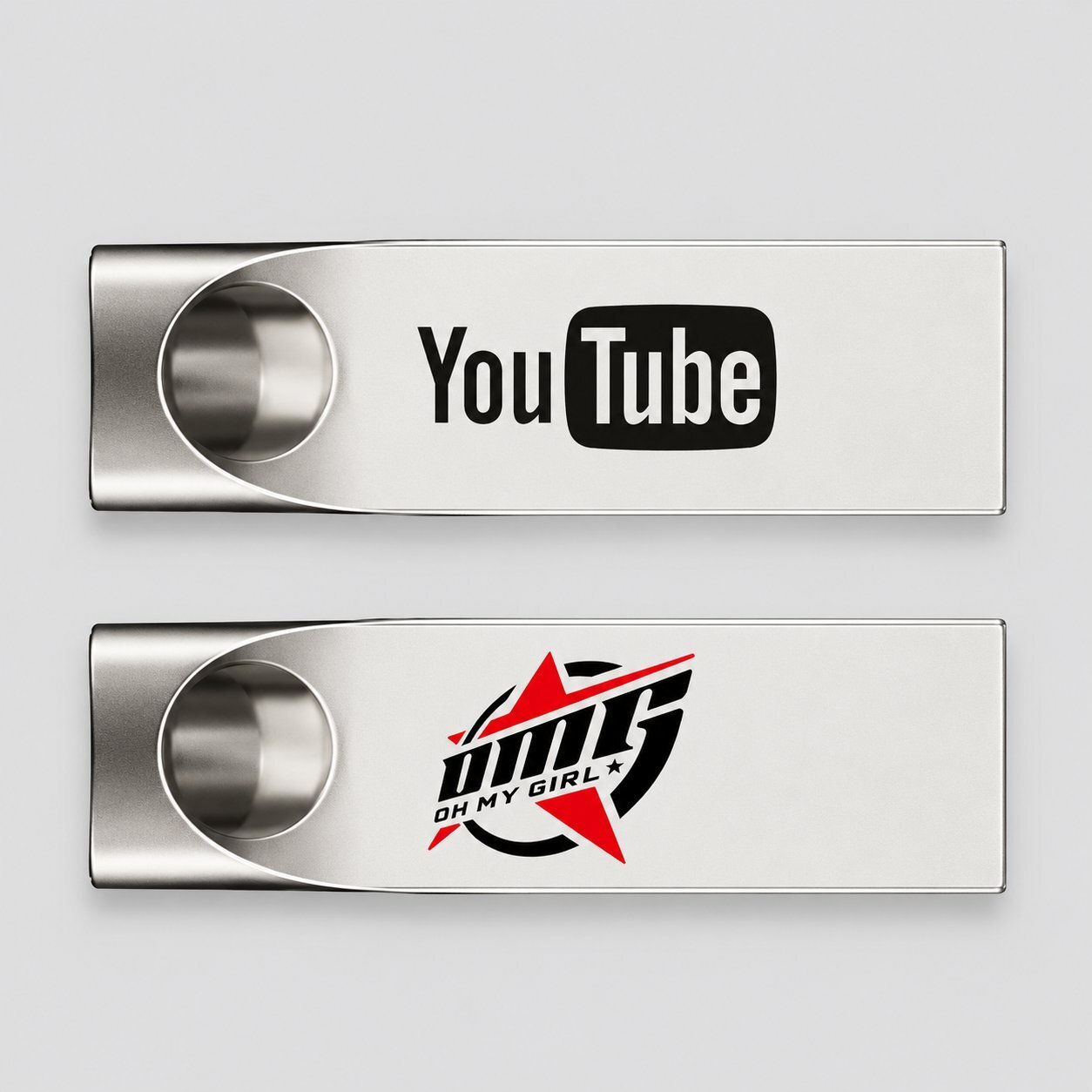
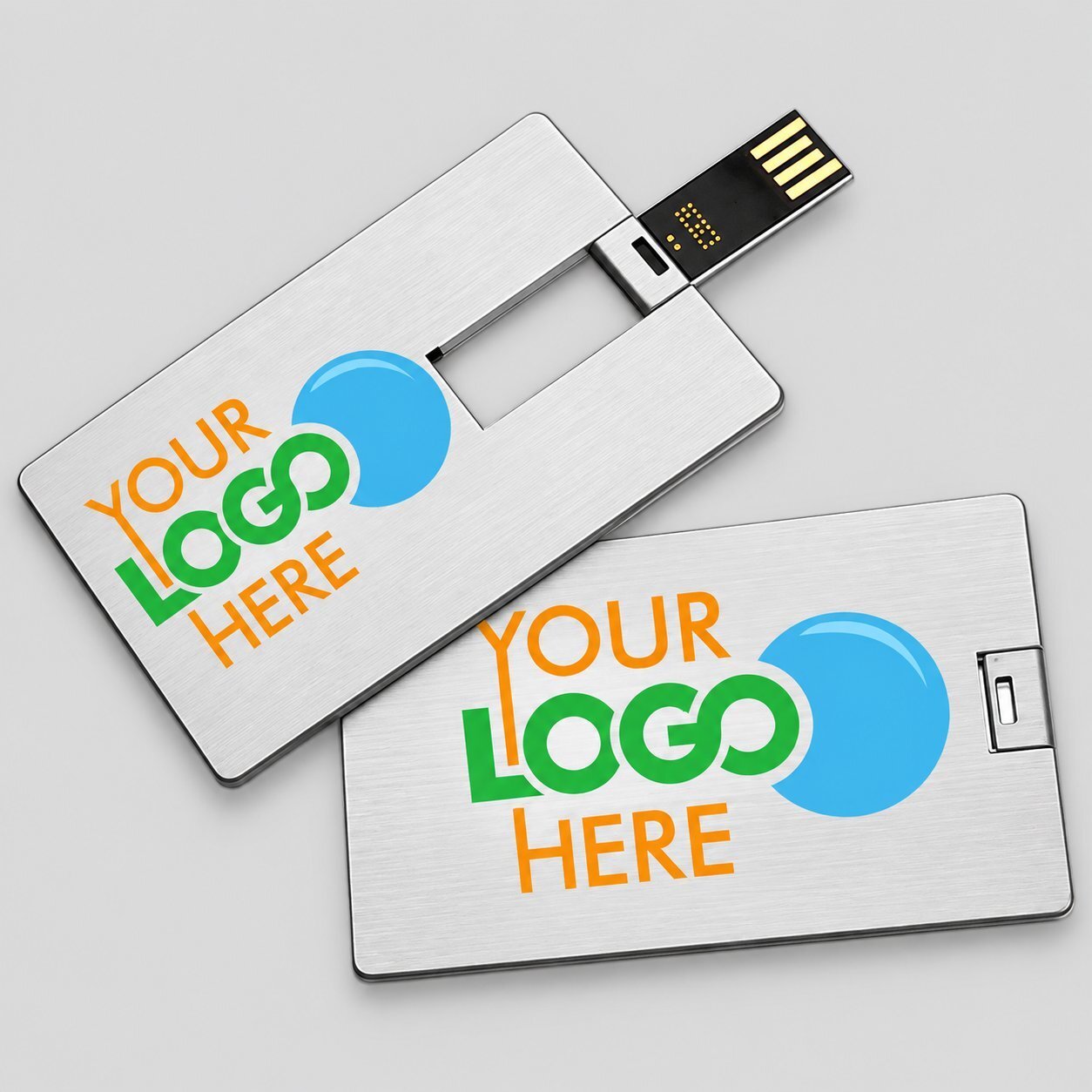
One detail buyers often miss: placement matters as much as color count. A front-only print costs meaningfully less than branding on the front, back, and sides together. Small, detailed logos can also cost more to execute cleanly than large simple ones, since factories run extra alignment checks to keep fine lines from smudging. Always ask for a physical mockup before production starts, not just a digital proof.
4. Order quantity
Setup work is close to the same whether you order 100 units or 5,000, so your per-unit cost drops as quantity rises. MOQ generally sits around 50 to 100 pieces for a standard, already-tooled style, and moves higher once you add custom requests. As an illustrative example, a 32GB plastic drive with one-color printing might run around $3.20 per unit at 100 pieces and closer to $2.20 per unit at 1,000-plus, depending on the memory market at the time you order.
Small repeat orders don’t automatically get treated as a continuation of your last run. A factory generally prices a second small batch the same way it prices a first one, so if you expect to reorder, it’s often cheaper to order a bit heavier the first time than to run two small batches. Add roughly 10% extra units to a school or event order as a buffer against damage or last-minute headcount changes.
5. Packaging
Packaging is where budgets get surprised, mostly because buyers finalize the drive itself and forget packaging is a separate line item. It breaks down into roughly four tiers: a plain poly bag or foam wrap adds well under $0.15 per unit, a printed paper box runs $0.20 to $0.80, a magnetic gift box with custom printing lands between $1.00 and $2.00, and a full premium set (velvet lining, branded box, matching lanyard) can add $2.00 to $3.50.
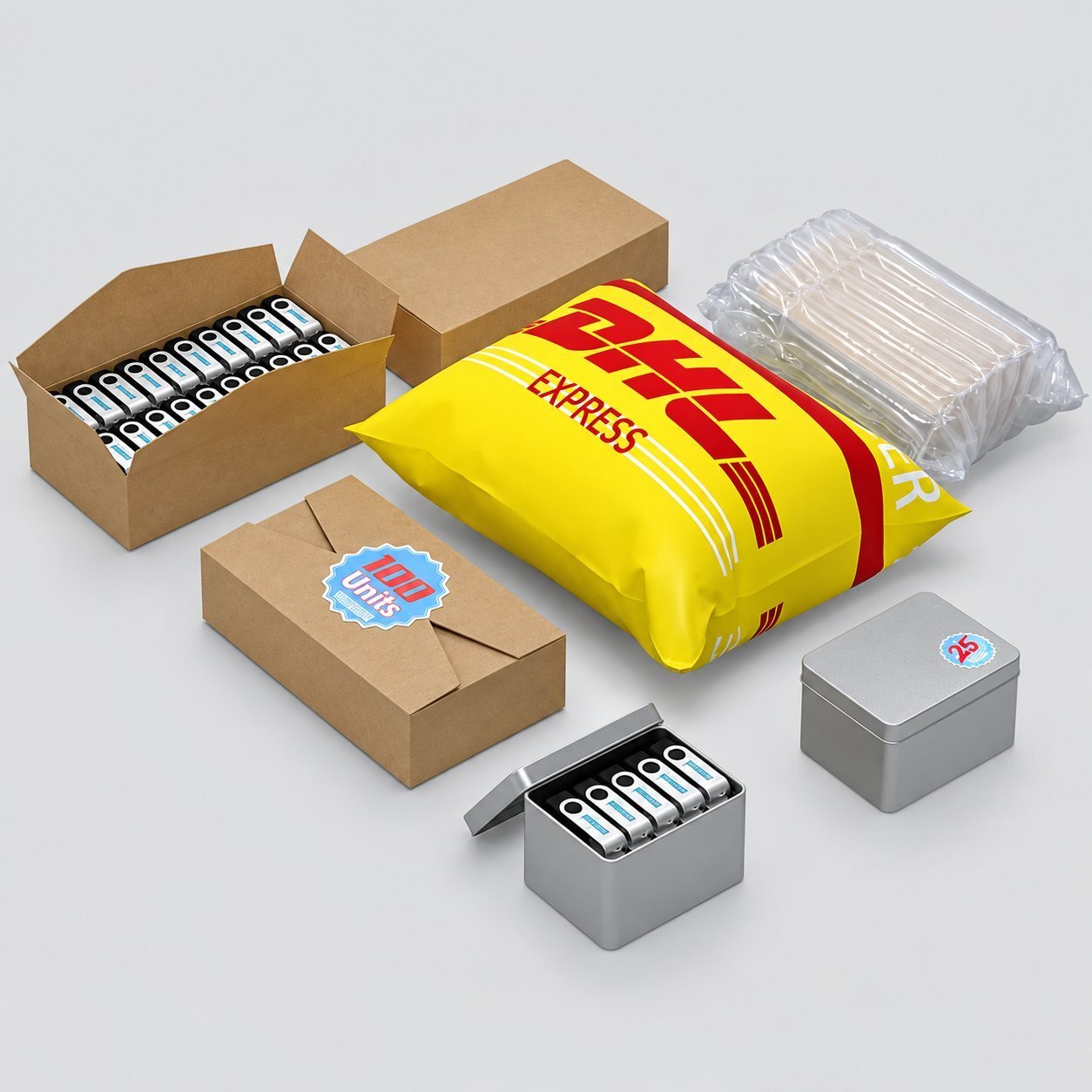
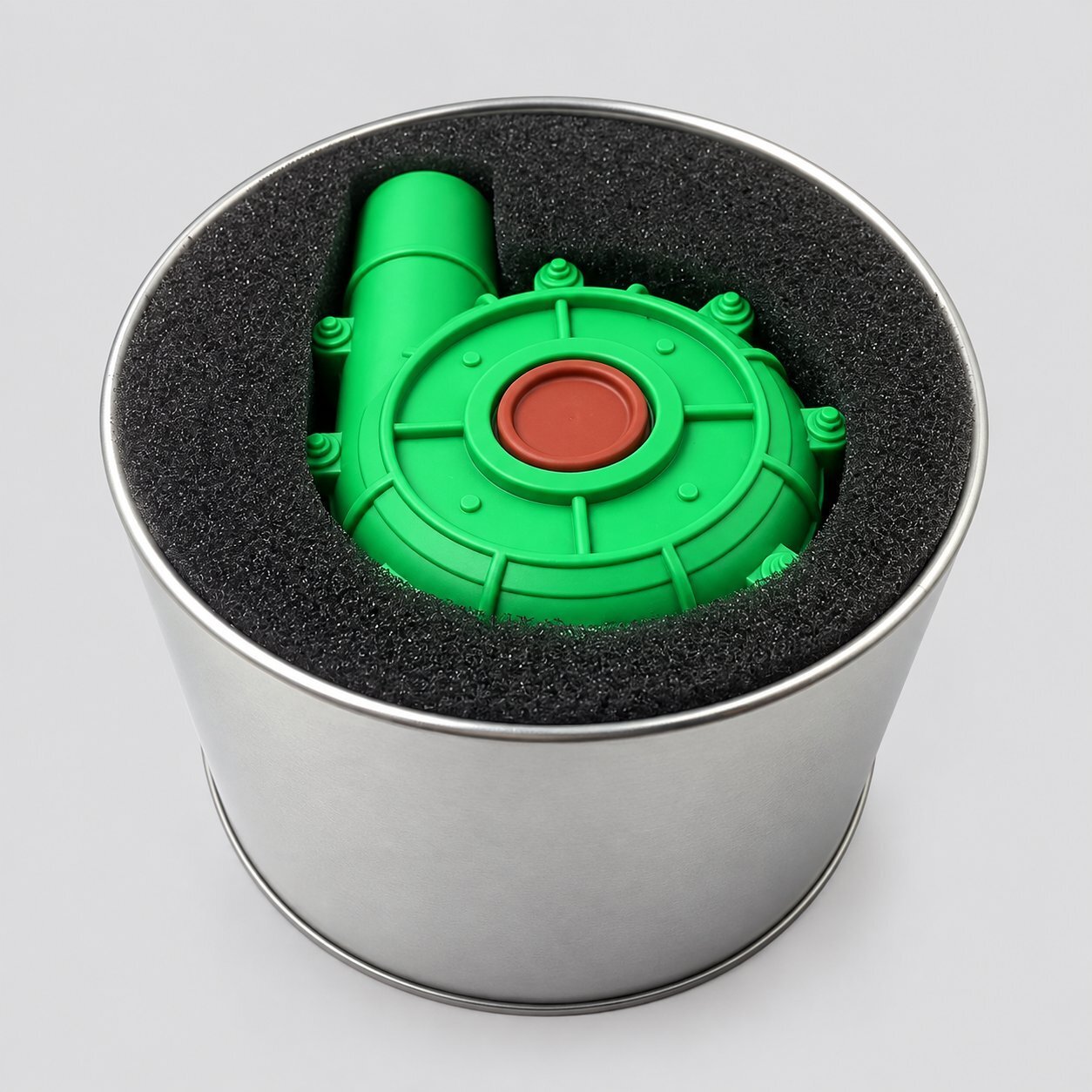
Match the tier to the context. A trade show handout doesn’t need more than a poly bag or basic carton, since nobody at a registration desk expects luxury packaging. A drive going to an investor, a law firm, or a high-value client is a different call, since the packaging is genuinely part of the impression at that point. Custom foam inserts also add real time to your production schedule, not just cost, so if your deadline is tight, a standard box size with a simpler insert is the safer choice.
If you’re shipping into the EU, confirm RoHS documentation separately from the packaging decision. RoHS restricts substances like lead, mercury, and cadmium in the drive itself, and EU customs can hold a shipment at the border if that paperwork isn’t ready, regardless of how the outer box looks.
6. Custom mold shapes
A fully custom mold, shaping the drive itself into a mascot, a bottle, a product silhouette, or a logo icon, carries the highest price tag of anything in this guide. It also delivers the strongest brand recall of anything here, which is usually why buyers accept the cost. The mold fee is a one-time charge. Once it’s paid, the drive body itself typically still runs $2 to $5 depending on capacity, and the more you reorder against that same mold, the easier it gets to justify the upfront cost per piece.
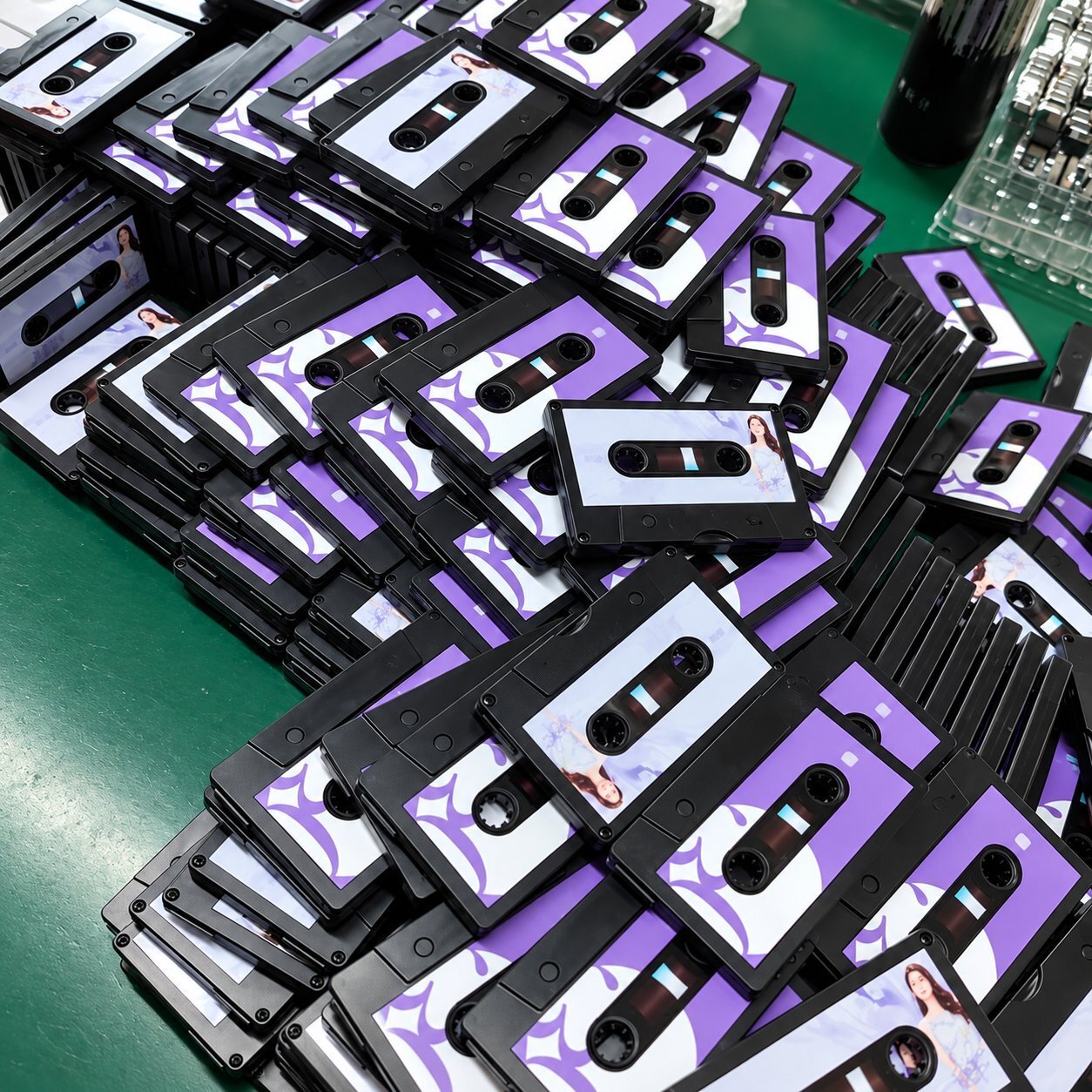
Keep the shape simple if you can. Thin edges and moving parts slow production and raise the defect rate, and a clean silhouette usually reads better from across a room than an overly detailed model does anyway. Ask upfront how long your supplier holds onto a completed mold for repeat orders, since a supplier that discards it after one run effectively resets your tooling cost on your next order.
Cost drivers at a glance
| Factor | Typical range added | What locks in your real number |
|---|---|---|
| Capacity (8GB-128GB) | $1.50-$10.00 per unit, capacity-dependent | Current chip-market quote, valid roughly one week |
| Interface (2.0 vs 3.0) | +20% to 50% for USB 3.0 | Confirmed against your chosen capacity |
| Casing material | Plastic baseline, +$0.30-$1.20 metal, +$0.50-$2.00 wood | Finish, weight, and shipping method |
| Logo/branding method | +$0.10-$0.80 for full-color or multi-surface | Logo complexity and placement |
| Order quantity | Per-unit cost drops as quantity rises | A tiered quote across two or three quantities |
| Packaging | Under $0.15 to $3.50 per unit, tier-dependent | Which tier fits the recipient, not just the drive |
| Custom mold | One-time fee, drive body stays $2-$5 | Shape complexity and whether the mold is kept for repeat orders |
Scope note: these ranges are a planning reference, not a live quote. Several third-party manufacturer and marketplace pages publish closely matching per-capacity figures for 2026, which is worth knowing since it suggests these are common industry planning numbers rather than one factory’s proprietary pricing. Get your exact number from a current quote tied to your specific capacity, material, logo, and quantity.
Custom USB Flash Drive Cost FAQ
Why do some USB suppliers quote much lower prices than others?
Usually because they’re using a lower memory grade or skipping pre-shipment testing. Ask directly whether you’re getting Grade A chips, what testing standard is applied before shipment, and what warranty terms come with the order, before you compare two quotes on price alone.
Is USB 3.0 worth the extra cost?
If your recipients transfer large files or media regularly, yes. If you’re preloading brochures or PDFs, USB 2.0 usually covers it without complaints and saves you the 20-50% premium.
Does a higher order quantity always mean a lower price?
Generally yes, since setup costs spread across more units, but the drop isn’t linear. Ask for pricing at two or three quantity tiers in the same quote so you can see exactly where the per-unit cost starts flattening out for your specific order.
What packaging tier actually makes sense for a corporate gift?
A magnetic box or a custom sleeve works well for client-facing industries like finance, law, or real estate. A premium box on a cheap-feeling drive doesn’t fix the mismatch, so match the packaging spend to the drive itself, not just the audience.
Do custom-shaped drives take longer to produce than standard shapes?
Usually, yes. A custom mold adds design approval, sampling, and fit testing on top of standard production, which commonly stretches lead time by one to three weeks. Worth it for a shape that gets remembered, but plan your timeline around it rather than around a standard-style order.
Send YOUSAN your target capacity, quantity, logo file, and packaging preference, and you’ll get a real quote tied to your exact order instead of a general planning range.
contact us to start the conversation.
 English
  Español de México
  Italiano
  Deutsch (Österreich)
  Русский
  Français
  Türkçe
  Bahasa Melayu